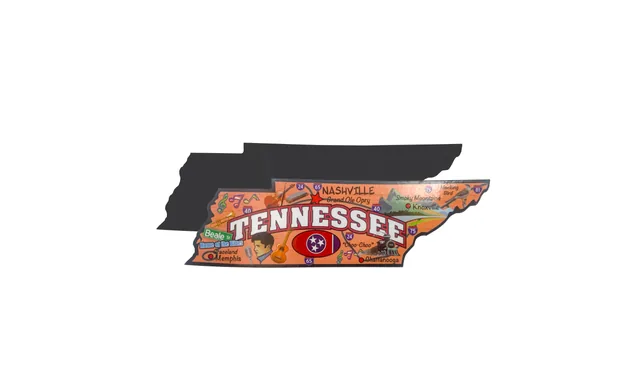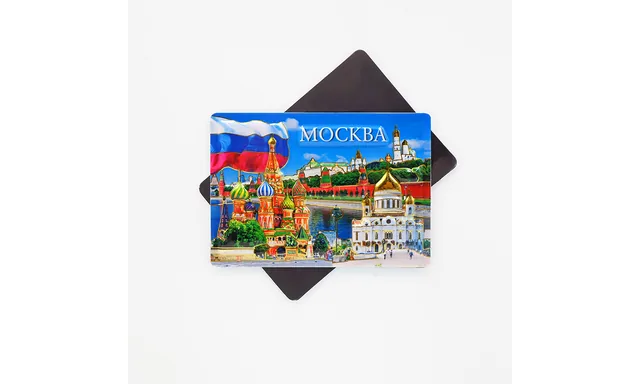
The process decides how the piece feels in the hand and what it can survive on the shelf. Pick by the destination and the retail environment, not by price alone.

A cured resin dome is poured over a printed and shaped base, so the artwork sits under a lens rather than on a flat face. Depth comes from the sculpted base underneath, which is what lets a cathedral or a coastline read as a shape rather than a picture of one.
Landmarks with recognisable silhouettes, and collections where one destination has to look visibly different from the next on a crowded rack.
Colour is built up in moulded layers rather than printed, so each colour is a physical piece of material with a raised border between it and the next. The result survives handling and sunlight far better than a printed surface.
Bold, cartoon-leaning artwork, and outdoor or coastal retail where a printed finish would fade.
The piece is cast or stamped in metal, then recessed areas are filled with enamel and the raised metal is plated. The plated metal stays visible as the outline of the design, which is where the weight and the perceived value come from.
Museums, heritage sites and any programme where the piece has to feel like a keepsake rather than a fridge decoration.

The shape is laser-cut from sheet stock, engraved where the design needs burnt-in line work, and UV printed where it needs colour. Grain shows through, so no two pieces are identical.
National parks, eco-positioned retail and destinations whose story is the landscape rather than a building.
Send the artwork or a reference piece and the destinations you cover. You get back a process recommendation with the reasoning, not just a price.