One mould, many destinations: what a plate change actually buys you
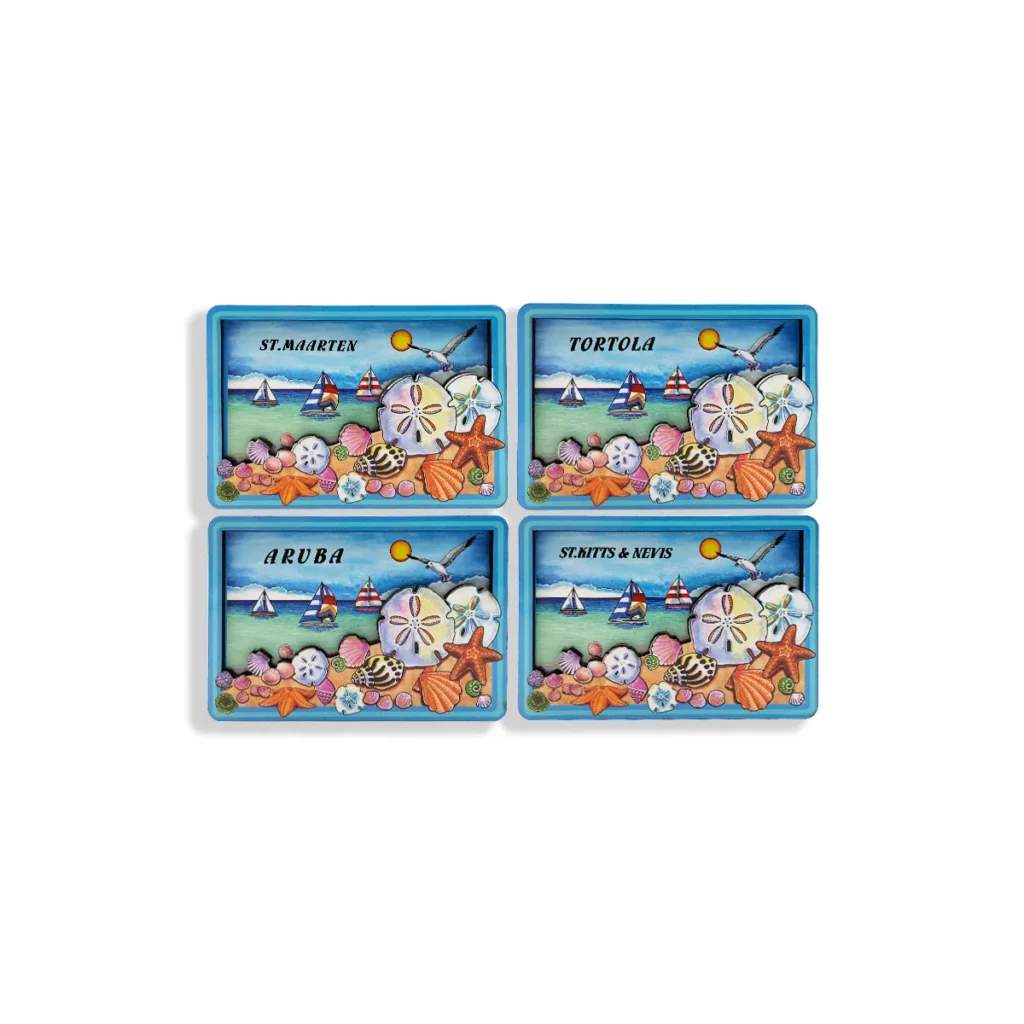
The expensive part of a souvenir magnet is not the piece. It is the tooling, and the fact that tooling is normally treated as single-use: one destination, one mould, one gamble on whether that destination sells.
That is what makes a buyer’s second destination as risky as the first, and it is why most ranges stall at the handful of locations someone was confident enough to fund.
The mechanism
On some processes the destination name is not part of the mould at all. The sculpted form, the shape, the depth — all of that is tooling. The name and the local artwork sit on a printed or engraved layer that goes on afterwards.
Change that layer and you have a different destination out of the same tool. The industry calls it a plate change, and it is the difference between funding a new mould and funding a new print run.
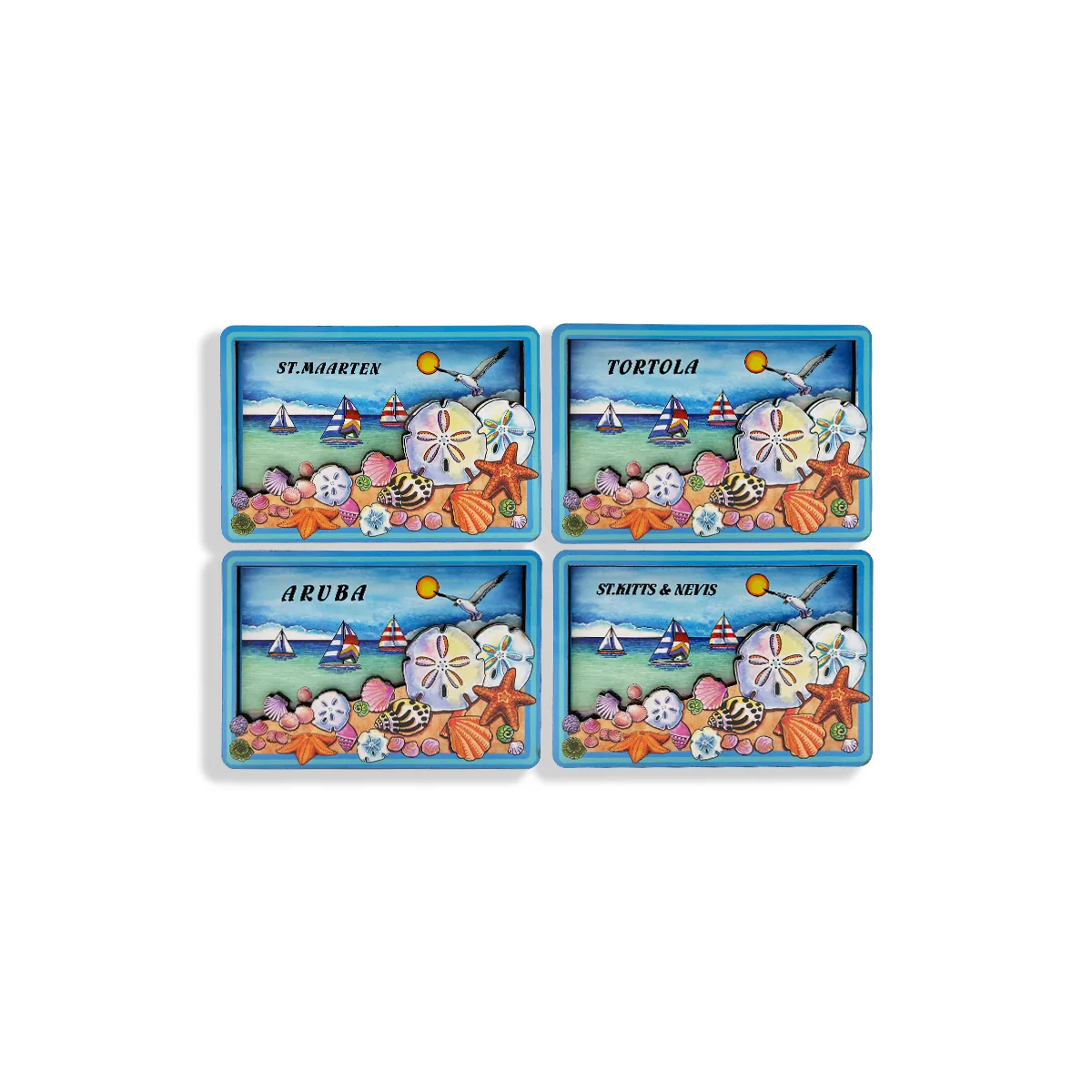
The three pieces above came off one tool. The form is identical in each. What changed is the layer carrying the destination.
Which processes make this cheap, and which do not
This is the part that decides whether the idea is available to you at all, and it follows directly from how each process puts colour on the piece.
| Process | Where the destination name lives | Cost of a new destination |
|---|---|---|
| 3D resin | On the printed base, under the dome | A print change. The mould is untouched. |
| Wood | In the engraving and UV print, on the same cut shape | A file change. The cut profile is untouched. |
| Soft PVC | Moulded in, as raised layers of material | Tooling work. The name is part of the mould. |
| Metal | Cast or stamped in, then enamelled | Tooling work. The name is part of the die. |
So a range built in resin or wood can grow destination by destination on a print change. A range built in soft PVC or metal cannot — every new name is a new tooling conversation. Neither is better. But if your plan is to cover thirty locations across a region, that table is the plan’s budget.
What it changes commercially
Tooling amortises across the range, not the destination. One mould funded once is spread over every location it is later reused for, which is a different unit economics from funding a mould per town.
A proven seller can be rolled out, not re-gambled. If one form sells through at a site, the next site gets a design already validated by till data rather than by opinion. The risk moves from “will this design work” to “does this location have traffic”, which is a question the buyer already knows the answer to.
The rack stays coherent. A range that shares a form reads as a collection. Visitors who buy one at the first stop recognise the second, which is the mechanism behind collectable ranges generally.
Where it does not apply
It only works where the form is generic to the region and the name is what localises it — a shell, a map outline, a wave, a boot, a bird. The moment the silhouette itself is the landmark, the mould is the destination, and a cathedral tool cannot become a lighthouse. Ranges usually end up split: a shaped hero piece for the two or three sites that justify their own tooling, and one shared form carrying everywhere else.
The other limit is honesty about the artwork. A shared form constrains the composition — the artwork area, the aspect, the place the name sits are fixed by the tool. Designers who have not seen the form first tend to submit layouts that do not fit it.
What to ask for in the quote
This is the practical part, and it is the part most quotes leave out. A first-order price does not tell you whether a range is affordable. Three numbers do, and they should be asked for separately:
- The plate-change fee — what a new destination costs on an existing tool
- The minimum order for a plate change — almost always lower than the first-order minimum, and the number that decides whether small sites are viable
- The tooling reuse position in writing — whether buyer-funded tooling is reserved for that buyer’s designs, and for how long
Ask for all three at quotation rather than after the first order, because the first order is when your leverage is highest and the tool has not been cut yet.
If you are planning a multi-site range, send the destinations you cover and the artwork or reference piece you already sell. You get back a feasibility summary within 48 hours, including which parts of the range can share a form and which cannot.