Custom Magnet Sample Approval: 27 Critical Checks Before Bulk
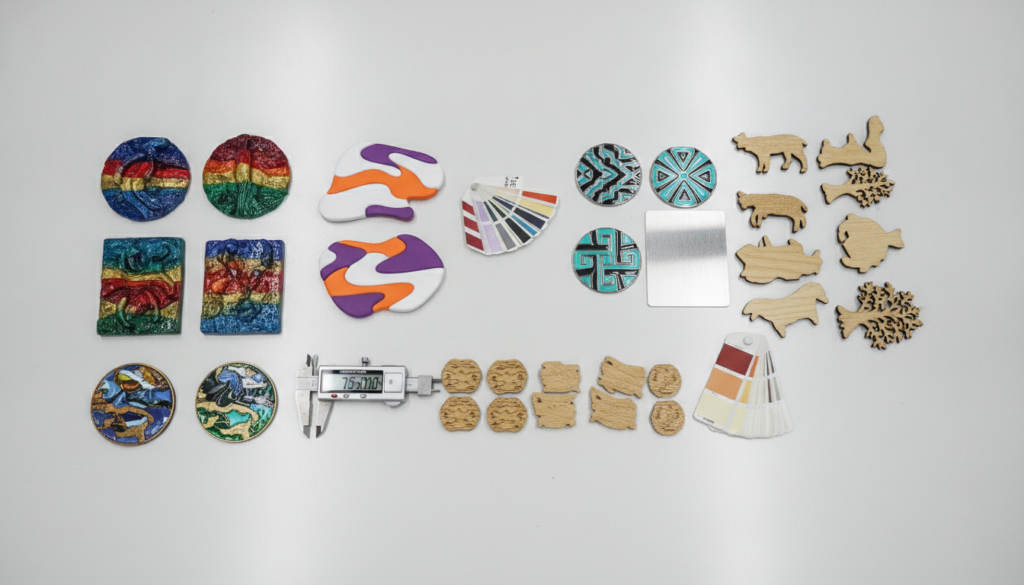
Custom magnet sample approval requires checking color accuracy against the design proof, verifying edge finish and material thickness, testing magnet strength on the intended display surface, and confirming that packaging is retail-ready with correct barcodes and labels. Physical samples reveal coating quality, detail resolution, and assembly issues that digital proofs cannot show, so buyers should inspect each sample against the specification before approving bulk production.
📋 Table of Contents
- Executive Summary
- How do you verify color accuracy on a physical sample?
- What edge finish issues should buyers watch for?
- How do you test magnet strength before approving bulk?
- What detail resolution problems appear only on physical samples?
- How do you check material thickness and weight?
- What coating and surface durability tests should buyers run?
- What packaging checks matter for retail presentation?
- Key Takeaways
Executive Summary
- Color accuracy: Physical samples show true color under retail lighting, not screen approximations, so buyers should compare samples to the approved design proof in natural light and under store fluorescent fixtures.
- Edge finish: Resin casting, PVC molding, metal stamping, and wood laser cutting each leave distinct edge signatures that affect perceived quality and retail shelf appeal.
- Magnet strength: Testing pull force on a vertical refrigerator door reveals whether the magnet will hold securely or slide and rotate during customer handling.
- Retail packaging: Incorrect barcodes, missing hang holes, or flimsy backing cards can make a product unsellable in tourist shops and museum stores, even when the magnet itself is correct.
- Material-specific checks: 3D resin samples require layer-alignment inspection, soft PVC samples need edge-flash review, metal samples demand plating-adhesion tests, and wood samples must be checked for char and splinter.

How do you verify color accuracy on a physical sample?
Compare the physical sample to the approved design proof under natural daylight and under the fluorescent or LED lighting used in your retail space. Screen colors shift depending on monitor calibration and ambient light, so digital proofs cannot predict final appearance. Buyers frequently discover that what looked acceptable on a laptop screen appears too dark, too saturated, or mismatched when the sample arrives.
Check color consistency across the design
Examine whether solid color blocks are uniform or show streaks, gradients, or uneven coverage. Resin magnets are cast in layers, so each color pour must cure evenly to avoid mottling. Soft PVC injection molding can trap air bubbles or leave flow lines if the mold temperature is incorrect. Metal enamel paint may pool in recessed areas or thin out on raised edges. Wood UV printing can show banding if the print head skips or the substrate is not flat.
Compare Pantone or CMYK references
If you supplied a Pantone reference or a CMYK breakdown, place the physical sample next to a printed Pantone swatch book or a color-calibrated proof. Resin and soft PVC accept custom pigment matching more reliably than metal enamel, which is limited to a supplier’s stock paint library. Wood substrates absorb UV ink unevenly, so white or pale colors often appear warmer or grayer than intended.
Test color stability under retail conditions
Leave the sample in direct sunlight for several hours or under a UV lamp to check for fading or yellowing. Resin formulations vary in UV resistance, and lower-cost resins can yellow within months if exposed to storefront windows. Soft PVC is generally more stable, but certain pigments, especially reds and purples, can shift under prolonged UV exposure. Metal enamel is the most fade-resistant, and wood with a UV-cured topcoat resists color change better than uncoated prints.
What edge finish issues should buyers watch for?
Edge quality separates professional souvenir magnets from budget imports. Run your finger along every edge of the sample to feel for burrs, sharp points, or rough transitions between layers. Buyers often approve a digital proof only to find that the physical product has jagged seams or exposed substrate that makes the magnet look cheap and feel unsafe for customer handling.
Resin edge inspection
3D resin magnets are cast in silicone molds, so edges should be smooth and rounded. Check for flash, which appears as thin resin webs extending beyond the intended outline, or for voids where the resin did not fill the mold completely. Flash can be trimmed by hand, but inconsistent trimming leaves some pieces with clean edges and others with visible tool marks. Voids indicate an underfilled mold or trapped air, and they cannot be fixed after casting.
Soft PVC edge flash
Injection-molded soft PVC often leaves a thin flash line where the two mold halves meet. This flash should be removed during post-molding trimming, but rushed production may skip or rush this step. Examine the sample under strong light to see whether flash remains, and check whether the trimmed edge is smooth or shows nicks and tears. Uneven trimming is a sign that the supplier uses manual cutting instead of die-cutting, which will lead to inconsistent edges across the bulk order.
Metal stamping burrs
Die-cast zinc alloy and stamped brass both produce burrs on cut edges. These burrs must be deburred and polished before plating, or they will remain sharp and visible under the final finish. Run your thumb along the back edge of the sample to feel for sharp points. If the sample has burrs, the bulk order will too, unless you require the supplier to add a deburring step and provide a revised sample.
Wood laser char and splinter
Laser-cut wood edges are charred by design, but excessive char can flake off and leave black residue on customers’ hands. Rub the edge firmly with a white cloth to check for char transfer. Inspect corners and fine details for splinters or incomplete cuts. Softwoods like basswood and plywood are more prone to splintering than hardwoods like maple, so buyers ordering intricate shapes should request a hardwood sample even if the quote assumes plywood.
How do you test magnet strength before approving bulk?
Attach the sample to a vertical refrigerator door or a steel display fixture and observe whether it holds securely, slides downward, or rotates when touched. Many buyers approve samples based on appearance alone, only to receive complaints that the magnets fall off or spin when customers handle them in the store.
Vertical hold test
Place the sample on a vertical steel surface at eye level and leave it for several hours. Check whether it has slid downward or rotated. A magnet that cannot hold its position under its own weight will not survive customer handling. Resin and soft PVC magnets are heavier than metal or wood magnets of the same size, so they require stronger magnetic backing to maintain vertical hold.
Slide resistance
Press the sample lightly with one finger and try to slide it horizontally across the steel surface. It should resist movement and require deliberate force to reposition. If the magnet slides easily, the magnetic strip is either too weak or too small relative to the magnet’s weight and surface area. Buyers should request a thicker magnetic strip or a switch from flexible magnetic sheeting to a rigid ferrite or neodymium disc.
Rotation stability
Tap the edge of the sample gently to see whether it rotates around its center. Magnets with a single small disc in the center are prone to rotation, especially if the design is asymmetric or top-heavy. Ask the supplier to add a second disc or switch to a full-coverage magnetic sheet to prevent spinning. Rotation is a common complaint in museum stores, where customers expect magnets to stay aligned when browsing a display wall.
Magnetic backing adhesion
Peel the magnetic backing away from the sample to check adhesion strength. The backing should resist separation and require firm, deliberate force to remove. If the backing peels off easily, the adhesive is insufficient or was applied to a contaminated surface. Resin and soft PVC surfaces must be clean and dry before the magnetic backing is applied, and metal surfaces may require a primer or roughening to improve adhesion. Wood substrates are the most challenging because grain texture and moisture content affect adhesive bond strength.
In practice: Resin magnets are cast in layers, so a physical sample is the only way to confirm that thin text and small color areas survive the pour and that the magnetic backing adheres securely to the cured resin surface before bulk production starts.
What detail resolution problems appear only on physical samples?
Fine text, thin lines, and small color blocks often look sharp in a digital proof but blur, merge, or disappear in the physical sample. This happens because production processes have minimum feature sizes that digital design software does not enforce.
Minimum text size for each process
Resin casting cannot reliably reproduce text smaller than 2mm in height because the resin flows and self-levels, blurring fine details. Soft PVC injection molding can hold slightly smaller text, around 1.5mm, but only if the mold is machined with high precision. Metal enamel painting is limited by brush or screen-printing resolution, so text smaller than 1mm often becomes illegible. Wood UV printing can achieve the finest detail, down to 0.5mm, but only on smooth, flat substrates.
Color separation and registration
Multi-color designs require precise alignment, called registration, between each color layer. Examine areas where two colors meet to see whether they align cleanly or show gaps and overlaps. Resin magnets with hand-poured layers are prone to registration drift, especially in small production runs where each piece is individually cast. Soft PVC molds with multiple color cavities can shift slightly between shots, causing misalignment. Metal enamel is applied in sequential layers, so each layer must cure and be aligned before the next is added. Wood UV printing offers the tightest registration because all colors are printed in a single pass.
Gradient and halftone reproduction
Gradients and photographic images rely on halftone dots or smooth color transitions that are difficult to reproduce in three-dimensional casting and molding. Resin and soft PVC are better suited to solid color blocks than to gradients, which often appear banded or stepped. Metal enamel cannot reproduce gradients at all and requires a simplified design with distinct color zones. Wood UV printing handles gradients and photos well, but the wood grain texture can interfere with fine halftone dots, making images appear grainy or mottled.
How do you check material thickness and weight?
Measure the sample’s thickness with a caliper and compare it to the specification. Thickness affects both perceived quality and shipping cost, so buyers should verify that the sample matches the quoted material gauge before approving bulk production.
Resin thickness and dome profile
3D resin magnets are defined by their relief depth, which ranges from shallow (1-2mm) to high relief (5-8mm). Measure the thickest point of the sample and compare it to the design specification. Thinner-than-specified resin reduces material cost but makes the magnet feel flimsy and look less three-dimensional. Check whether the dome profile is smooth and consistent or shows flat spots and sag marks from improper curing or mold release.
Soft PVC gauge
Soft PVC magnets are typically molded in 2-4mm thickness. Thinner gauges are flexible and feel rubbery, while thicker gauges are more rigid and substantial. Squeeze the sample between your fingers to assess flexibility and compare it to the tactile quality you want for your retail presentation. Buyers targeting premium museum stores often prefer thicker, more rigid PVC, while souvenir shops selling to tourists may accept thinner, lower-cost gauges.
Metal base thickness
Die-cast zinc alloy magnets are usually 1.5-3mm thick, while stamped brass ranges from 0.5-1.5mm. Thicker metal feels more substantial and resists bending, but it also increases weight and shipping cost. Weigh the sample on a gram scale and multiply by the order quantity to estimate total shipping weight. A magnet that weighs 15 grams instead of the expected 10 grams will increase freight cost and may push the shipment into a higher weight bracket.
Wood substrate and backing
Laser-cut wood magnets are typically 3-6mm thick, depending on whether the substrate is plywood, basswood, or hardwood veneer. Thicker wood is more durable and less prone to warping, but it also requires a stronger magnetic backing to maintain vertical hold. Check the sample for warping by placing it on a flat surface and looking for gaps under the edges. Wood that is not kiln-dried or is stored in high humidity will warp after cutting, and this warping will persist in the bulk order.
What coating and surface durability tests should buyers run?
Scratch the sample lightly with a fingernail, rub it with a damp cloth, and leave it in a humid environment overnight to check for coating adhesion, water resistance, and humidity tolerance. Souvenir magnets are handled repeatedly by customers in retail environments, so surface durability is critical to maintaining appearance and preventing returns.
Scratch resistance
Drag a fingernail across a flat color area with moderate pressure. The coating should resist scratching and show no visible mark. Resin magnets with a glossy topcoat are highly scratch-resistant, while matte-finish resin can show scuff marks more easily. Soft PVC is naturally scratch-resistant because the color is molded into the material, not applied as a surface coating. Metal enamel varies in hardness depending on the curing process, so buyers should test both the enamel surface and the plated areas. Wood UV printing is protected by a clear topcoat, which should be tested separately from the printed surface.
Water and humidity exposure
Wipe the sample with a damp cloth and inspect for color bleeding, coating delamination, or surface swelling. Leave the sample in a bathroom or other high-humidity space overnight and check for changes in appearance or adhesion. Resin magnets are inherently waterproof, but the magnetic backing adhesive can weaken in humid conditions. Soft PVC is also waterproof, but printed details on the surface may fade if the ink is not UV-cured. Metal magnets must be fully sealed with clear coating or plating to prevent rust, especially if they will be sold in coastal or tropical climates. Wood magnets are the most vulnerable to humidity, which can cause swelling, warping, and delamination of the UV-printed surface.
UV and yellowing resistance
Place the sample in direct sunlight or under a UV lamp for several hours and compare it to an unexposed control sample. Resin formulations with inadequate UV stabilizers will yellow noticeably, especially in clear or white areas. Soft PVC is generally UV-stable, but certain pigments can fade. Metal enamel and plating are UV-resistant, and wood with a UV-cured topcoat resists yellowing better than lacquer or varnish finishes.
Drop and impact resistance
Drop the sample from waist height onto a hard floor to simulate customer handling and accidental drops. Inspect for cracks, chips, or delamination. Resin magnets can chip at corners and edges if the resin is brittle or the relief is too thin. Soft PVC is impact-resistant and rarely cracks, but the magnetic backing can separate on impact if adhesion is weak. Metal magnets can dent or bend, and enamel can chip off at impact points. Wood magnets can splinter or crack, especially at thin or intricate areas.
What packaging checks matter for retail presentation?
Inspect the backing card, hang hole, barcode, and any protective sleeves or boxes to confirm that the packaging is retail-ready and matches your store’s merchandising requirements. Incorrect or incomplete packaging is one of the most common reasons buyers reject samples, yet it is often overlooked until the bulk order arrives.
Backing card size, material, and printing
Measure the backing card and compare it to your peg display or shelf fixture to ensure a proper fit. Standard backing cards are 3×5 inches or 4×6 inches, but custom sizes may be required for specific display systems. Check the card material: thin cardstock will curl and fade under store lighting, while thick chipboard or rigid plastic maintains a professional appearance. Verify that all printed information (product name, barcode, price, country of origin, safety warnings) is legible, correctly spelled, and positioned where it will not be obscured by the magnet or hang hole.
Hang hole placement and reinforcement
Examine the hang hole to confirm that it is correctly positioned for your peg display and that it is reinforced with a grommet or doubled cardstock to prevent tearing. Unreinforced hang holes in thin cardstock will tear when the product is hung and removed repeatedly, leading to damaged packaging and unsellable inventory. Test the hang hole by hanging the sample on a peg and lifting it off several times to simulate customer browsing.
Barcode accuracy and scannability
Scan the barcode with a retail scanner or a smartphone barcode app to verify that it encodes the correct product number and that it scans reliably. Barcodes printed at low resolution or on glossy surfaces can be difficult to scan, causing checkout delays and customer frustration. If you supplied a UPC or EAN number, confirm that the printed barcode matches exactly. If the supplier generated the barcode, verify that it is unique and not duplicated across multiple products.
Protective sleeves and retail boxes
If the magnet is packaged in a clear sleeve or a printed box, inspect the fit, clarity, and durability. Sleeves should be tight enough to hold the magnet securely but loose enough to allow easy removal. Boxes should close securely and protect the magnet from scratches and impacts during shipping and handling. Check that any printed graphics on the box match the approved design and that the box material is sturdy enough to survive stacking and transport.
Compliance labeling for target markets
Verify that the packaging includes all required compliance information for your target market. Magnets sold in the United States must display country of origin and may require CPSIA tracking labels if marketed to children. European Union markets require CE marking and material composition disclosure under REACH. Australia and New Zealand require compliance with AS/NZS ISO 8124 for toys. Japan requires ST mark certification for children’s products. Museum stores and educational retailers often have stricter labeling requirements than general souvenir shops, so buyers should confirm packaging compliance before approving the sample.
Key Takeaways
- Physical samples reveal color accuracy, edge finish, and material thickness that digital proofs cannot show, so buyers should inspect every sample under retail lighting conditions before approving bulk production.
- Magnet strength testing on a vertical surface confirms whether the magnet will hold securely or slide and rotate during customer handling, preventing complaints and returns.
- Detail resolution varies by process: resin casting, soft PVC molding, metal enamel, and wood UV printing each have minimum feature sizes that affect text legibility and color separation.
- Coating durability tests, including scratch resistance, water exposure, UV stability, and drop impact, identify surface weaknesses that will lead to quality complaints in retail environments.
- Retail packaging must be checked for backing card fit, hang hole reinforcement, barcode scannability, and compliance labeling to ensure the product is shelf-ready and meets target-market regulations.
- Material-specific inspection criteria differ across 3D resin, soft PVC, metal, and wood magnets, so buyers should use a process-appropriate checklist rather than a generic approval template.
Should I approve a sample based on photos or video, or insist on a physical sample?
Always insist on a physical sample before approving bulk production. Photos and videos cannot accurately represent color under retail lighting, surface texture, edge finish, or magnet strength. Screen colors shift depending on monitor calibration, and camera lighting can hide defects that are obvious in person. Buyers who approve based on digital images frequently discover that the bulk order does not match their expectations for color, finish, or quality. Shipping a physical sample adds time and cost to the sampling process, but it prevents far more expensive problems in the bulk order.
What should I do if the sample has defects but the supplier says they will fix them in bulk production?
Require a revised sample that demonstrates the fix before approving bulk production. Suppliers often promise to correct defects in the bulk order without changing the production process, which means the same defects will reappear. Document the specific defect (color mismatch, weak magnet, rough edges, incorrect packaging) in writing and request a new sample that addresses the issue. Approve bulk production only after you have inspected and approved a defect-free sample. This approach adds one sampling cycle but eliminates the risk of receiving a bulk order that repeats the original problem.
How many samples should I request before approving bulk production?
Request enough samples to inspect variation across the production run, typically three to five pieces for a single design. A single sample may be a hand-picked best piece that does not represent typical production quality. Multiple samples reveal whether color, edge finish, and magnet strength are consistent or vary from piece to piece. If the supplier produces the magnets in multiple molds or on multiple production lines, request samples from each mold or line to check for consistency. For large orders or high-value products, some buyers request a larger pre-production batch to inspect statistical variation before committing to full production.
Custom magnet sample approval protects your retail investment by catching color, finish, and packaging problems before bulk production. Magnista produces custom souvenir magnets in 3D resin, soft PVC, metal, and wood, with design proof, physical sample sign-off, and pre-shipment checks before bulk. Every order goes through a structured approval process that locks the final specification and prevents production drift.
Ready to approve a sample that matches your retail standards?
Request a physical sample →
Written by the Magnista export team, who coordinate design proofs, sampling and production for custom souvenir magnets.