How to Keep Colors Consistent When Reordering Souvenir Magnets
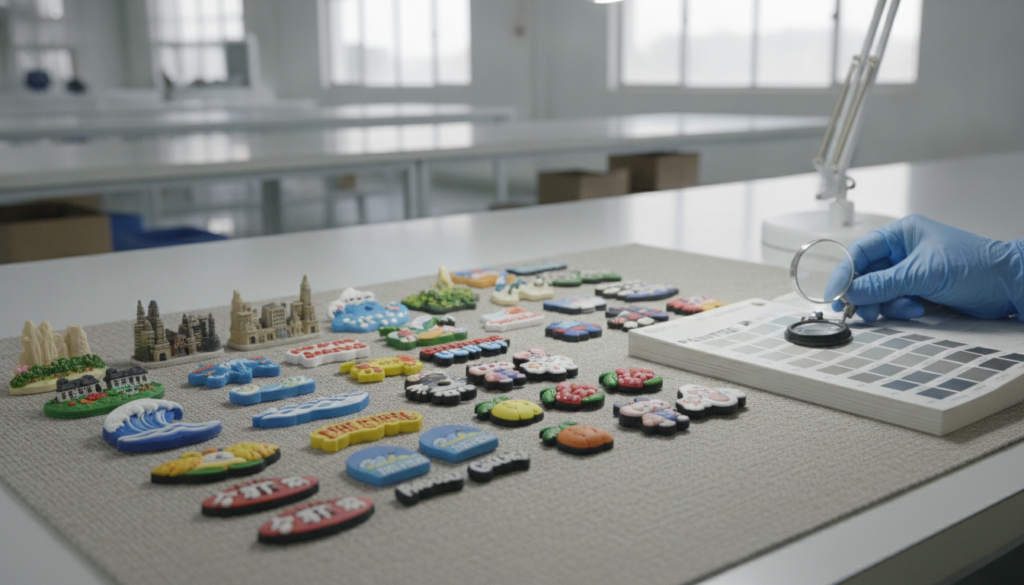
To reorder souvenir magnets color match consistently, specify colors using Pantone references rather than RGB or descriptive names, keep a signed physical master sample on file at both your warehouse and the production partner, and verify that no material or process variables changed between runs. For 3D resin magnets confirm the exact resin formula and pour sequence; for soft PVC check the injection-mold cavity and colorant batch; for metal verify the plating chemistry and enamel paint lot; for wood confirm the UV ink set and laser power. Every reorder should include a matched pre-production sample inspected under daylight-equivalent lighting before bulk production starts.
📋 Table of Contents
- Executive Summary
- Why Does Color Matching Fail on Reorders?
- How Do You Use Pantone References for Magnet Reorders?
- What Is a Master Sample and How Do You Archive It?
- How Do Color-Match Requirements Differ by Substrate?
- What Should Your Reorder Specification Include?
- Should You Request a Pre-Production Sample Every Time?
- Key Takeaways
Executive Summary
- Pantone is the only universal color language: RGB shifts between screens, and descriptive names like ‘sky blue’ vary by factory and operator, so every reorder specification must reference a numbered Pantone swatch.
- Physical master samples prevent drift: Keep one signed sample at your facility and send a duplicate to the production partner, stored in darkness to prevent UV fade, and photograph it under daylight-equivalent lighting for digital reference.
- Substrate chemistry determines match difficulty: 3D resin requires layer-by-layer color control, soft PVC depends on injection-mold cavity cleanliness, metal enamel paint varies by plating base, and wood UV ink adheres differently across grain patterns.
- Pre-production proofs catch drift early: A matched sample produced from the same mold, resin batch, or paint lot before bulk production starts lets you reject mismatches before thousands of pieces are made.
- Lighting consistency is non-negotiable: Inspect every reorder sample under the same daylight-equivalent bulb used for the original approval, because fluorescent and LED light sources shift color perception by several Delta E units.
Why Does Color Matching Fail on Reorders?
Color drift happens when production variables change between runs. The most common cause is batch variation in raw materials. Resin suppliers reformulate their base compounds, PVC colorant lots shift slightly, metal plating baths age, and wood substrates absorb UV ink differently depending on moisture content and grain density. A second cause is operator turnover: the technician who mixed the original paint may no longer work at the factory, and the new operator interprets the same written instruction differently.
A third cause is mold or tooling wear. For 3D resin magnets, mold cavities develop micro-scratches that trap air and alter the resin flow, changing how thin color layers appear. For soft PVC, injection-mold gates widen over thousands of cycles, increasing shot volume and diluting colorant concentration. For metal magnets, stamping dies lose edge sharpness, and enamel paint pools unevenly in worn recesses. For wood, laser engraving heads degrade, reducing burn depth and changing the contrast between engraved and printed areas.
A fourth cause is the absence of a physical reference. When a buyer reorders by email and writes ‘same colors as last time,’ the factory searches its records, finds an order number, and assumes the current operator remembers the exact shade. Without a physical sample in hand, the operator guesses, and the reorder arrives two shades lighter or darker than the original.
What Happens When RGB or CMYK Values Replace Pantone?
RGB values describe light emitted by a screen, not pigment reflected from a physical surface. The same RGB triplet renders differently on an iPhone, a Dell monitor, and a factory workstation because each device uses a different color profile and backlight spectrum. CMYK percentages fare slightly better because they describe ink coverage, but CMYK assumes coated paper as the substrate. Resin, PVC, zinc alloy, and wood all reflect light differently than paper, so a CMYK formula that looks correct on a printed proof will appear wrong when applied to a magnet.
Pantone swatches are physical pigment standards. When you specify Pantone 185 C, the factory pulls a swatch book, holds it next to the mixed paint or resin, and adjusts the formula until the two match under daylight. This eliminates screen-to-screen and substrate-to-substrate guesswork.
How Does Factory Turnover Affect Color Memory?
Production partners in China experience operator turnover, especially after Chinese New Year and during peak export seasons. A new paint mixer or resin technician inherits a written formula but lacks the tacit knowledge the original operator used to compensate for ambient humidity, resin temperature, or mixing-paddle speed. These micro-adjustments, never documented, are what kept the first run’s colors accurate. When the operator changes, the formula alone is insufficient, and the reorder drifts.
This is why a physical master sample, not a formula alone, is the reference. The new operator compares the fresh batch directly to the approved sample, adjusting the mix until they match, regardless of what the written formula says.
How Do You Use Pantone References for Magnet Reorders?
Specify every color in your design using a Pantone Solid Coated (C) or Solid Uncoated (U) number. Coated swatches simulate glossy surfaces like resin and metal; uncoated swatches simulate matte surfaces like soft PVC and wood. The production partner holds the physical swatch next to the mixed colorant and adjusts until they match under a daylight bulb rated at 5000K to 6500K color temperature.
For designs with gradients or photographic elements, convert the artwork to spot colors before quoting. A four-color-process print on a magnet will never match a reorder because CMYK ink ratios shift with humidity, substrate prep, and press calibration. Spot colors mixed to Pantone standards stay consistent across runs.
What If Your Design Uses a Brand Color With No Pantone Equivalent?
Send a physical sample of the branded item alongside the Pantone swatch book and ask the supplier to identify the closest match. The supplier photographs the item next to several candidate swatches under daylight, sends you the image, and you approve the closest one. That Pantone number becomes the reorder reference. If the brand color falls between two swatches, the supplier can mix a custom formula and create a lab dip, a small batch of the mixed colorant dried on the actual substrate. You approve the lab dip, and the supplier archives the formula and a physical chip of the dried color.
How Do You Handle Metallic and Fluorescent Colors?
Pantone publishes separate Metallics and Neons swatch books. Metallic colors on magnets use aluminum or bronze powder suspended in clear resin or enamel, and the particle size and base-coat reflectivity change the final appearance. Fluorescent colors require UV-reactive pigments that fade faster than standard colorants, so reorders of fluorescent magnets should include an accelerated-aging test: expose the pre-production sample to direct sunlight for 48 hours and compare it to the master sample to confirm the fade rate is acceptable.
For wood magnets with metallic UV ink, the grain pattern beneath the ink layer affects the metallic sheen. Specify that all pieces in a reorder must use the same wood species and grain orientation as the master sample.
What Is a Master Sample and How Do You Archive It?
A master sample is a production-approved magnet from the original order, signed and dated by both buyer and supplier, that serves as the physical reference for all future reorders. You keep one at your warehouse, the supplier keeps a duplicate at the factory, and both samples are stored in opaque containers away from UV light to prevent fading.
When you reorder, you photograph your master sample under a daylight bulb, attach the image to the purchase order, and reference the original order number and the Pantone specifications. The supplier retrieves their archived duplicate, photographs it under the same lighting, and confirms that both samples still match before starting production. If either sample has faded or been damaged, you send a replacement from your stock, or the supplier produces a fresh matched sample for your approval before bulk production begins.
How Do You Photograph a Master Sample for Digital Reference?
Use a lightbox or a desk lamp with a daylight-balanced LED bulb rated at 5000K to 6500K. Place the magnet flat on a neutral gray or white background, position the camera directly above to eliminate shadows, and disable the camera’s auto white balance, locking it to the daylight preset. Take three photos: one of the full magnet, one closeup of the most critical color area, and one with a Pantone swatch placed next to the magnet for reference. Save the images in a folder named by order number and date, and attach them to every reorder inquiry.
What If the Supplier Lost Their Archived Sample?
Ship a replacement from your stock via express courier and require the supplier to photograph it upon receipt, confirming they have archived it in a labeled, light-proof container. Add a clause to your reorder terms that the supplier must maintain the master sample for a minimum of two years or until you notify them that the SKU is discontinued. If the supplier cannot commit to this, find a production partner with formal sample-archiving procedures.
How Do Color-Match Requirements Differ by Substrate?
Each magnet substrate introduces unique color-control challenges. 3D resin magnets are cast in layers, so color consistency depends on pour sequence, resin viscosity, and cure time between layers. Soft PVC magnets are injection-molded, so color depends on mold temperature, injection pressure, and colorant dispersion in the liquid PVC. Metal magnets use enamel paint over a plated base, so color depends on plating thickness, paint viscosity, and baking temperature. Wood magnets use UV-cured ink over laser-engraved surfaces, so color depends on wood species, grain density, and laser power.
What Color-Control Steps Matter for 3D Resin Magnets?
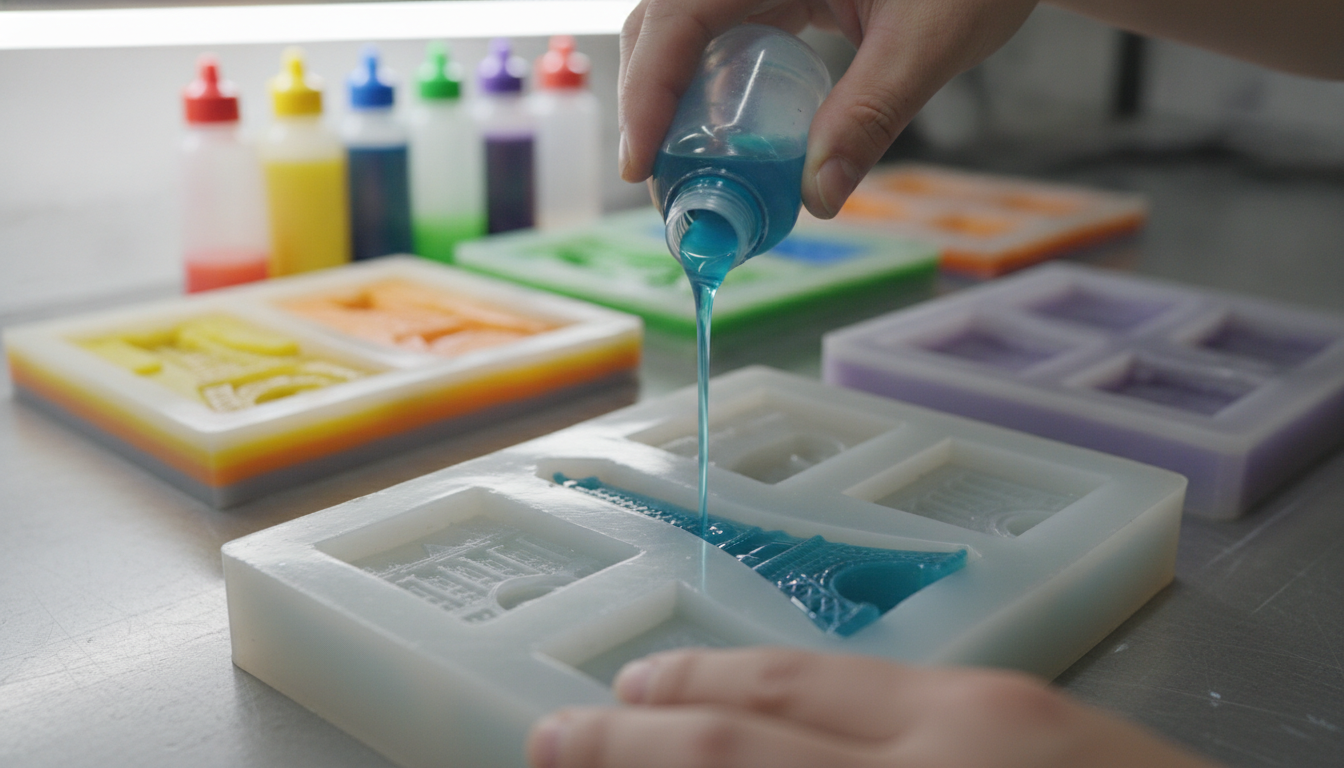
3D resin magnets achieve depth and detail by pouring multiple resin layers into a mold, each layer a different color, with thin separators or air gaps between them. Color consistency requires that every layer uses resin from the same batch and that the pour sequence and cure time match the original run. Resin viscosity changes with ambient temperature, so a summer reorder may flow faster than a winter original, causing colors to bleed into adjacent layers. The supplier should store resin in a climate-controlled room and warm or cool it to the same temperature used in the original run before pouring.
Resin also yellows over time when exposed to UV light. If the master sample was produced six months ago and stored in a display case under halogen bulbs, its white and light-blue layers will have yellowed slightly. The reorder, produced from fresh resin, will appear brighter. To prevent this, store the master sample in darkness and inspect it under UV light before approving the reorder proof. If the master has yellowed, produce a fresh reference sample from the current resin batch and approve it as the new standard.
How Do You Control Color in Soft PVC Magnets?
Soft PVC magnets are injection-molded from liquid PVC mixed with colorant and plasticizer. Color consistency depends on three variables: colorant batch, mold-cavity cleanliness, and injection temperature. If the mold cavity contains residue from a previous color, the new batch will be contaminated. The supplier should purge the mold with clear PVC between color changes and inspect the cavity under magnification for trapped pigment.
Injection temperature affects colorant dispersion. If the PVC is too hot, the colorant breaks down and shifts toward brown or gray. If the PVC is too cool, the colorant does not disperse evenly, and the magnet surface shows streaks or mottling. The supplier should record the injection temperature from the original run and replicate it exactly for the reorder.
Soft PVC also absorbs moisture from the air, which dilutes the colorant and lightens the final color. The supplier should store PVC in sealed containers with desiccant packs and dry it in an oven before injection if the ambient humidity exceeds 60 percent.
What Affects Color Matching in Metal Magnets?
Metal magnets use die-cast zinc alloy or stamped brass as the base, with enamel paint or screen-printed ink in recessed areas and a clear epoxy dome over the top. Color consistency depends on the plating finish beneath the paint. A bright-nickel plating reflects more light than an antique-brass plating, so the same enamel paint will appear lighter on nickel and darker on brass. The reorder specification must state the exact plating type and thickness used in the original run.
Enamel paint is mixed in small batches, and each batch varies slightly. The supplier should archive a dried paint chip from the original batch alongside the master sample. For the reorder, the supplier mixes a fresh batch, dries a test chip, and compares it to the archived chip under daylight. If the new batch is off, the supplier adjusts the formula and repeats the test until the chips match.
The epoxy dome also affects color. A thick dome magnifies the paint beneath and shifts the hue slightly blue or yellow depending on the epoxy’s refractive index. The reorder should use epoxy from the same supplier and cure it at the same temperature as the original run.
How Do Wood Magnets Maintain Color Consistency?
Wood magnets use laser-cut plywood or solid wood with UV-cured ink printed on the surface. Color consistency depends on wood species, moisture content, grain pattern, and laser engraving depth. Ink adheres differently to maple, birch, and bamboo, and the same ink formula will appear lighter on light-colored wood and darker on dark-colored wood. The reorder specification must state the exact wood species and grade used in the original run.
Laser engraving burns the wood surface, creating a dark brown or black contrast area. If the laser power or speed changes between runs, the engraved area will be lighter or darker, and the printed ink will sit at a different depth, changing its apparent color. The supplier should record the laser settings from the original run and replicate them exactly for the reorder.
Wood also absorbs UV ink at different rates depending on grain density. A reorder using wood from a different log or harvest season may show color variation even when the ink formula is identical. To minimize this, specify that all pieces in a reorder must come from the same wood lot as the master sample, or accept a small color range and define the acceptable tolerance in Delta E units.
What Should Your Reorder Specification Include?
A reorder specification is a written document that lists every variable the supplier must replicate to match the original run. It should include the original order number, the date of the original production run, the Pantone color references, the substrate type and grade, the production process, the mold or tooling ID number, and a reference to the archived master sample. It should also state any acceptable tolerance, such as Delta E less than 2.0 for critical brand colors or Delta E less than 3.0 for secondary colors.
- Original order number and production date: the supplier uses this to retrieve the archived sample, formula, and process notes from the original run.
- Pantone color references: every color in the design listed by Pantone number, with a note of whether the swatch is Coated or Uncoated.
- Substrate type and grade: for resin, the resin supplier and product code; for PVC, the Shore A hardness; for metal, the alloy and plating type; for wood, the species and grade.
- Production process details: for resin, the pour sequence and cure time; for PVC, the injection temperature and pressure; for metal, the paint baking temperature; for wood, the laser power and speed.
- Mold or tooling ID: the unique identifier for the mold, die, or screen used in the original run, to ensure the reorder uses the same tooling.
- Master sample reference: a statement that the reorder must match the archived master sample, with a photograph of the sample attached to the specification.
- Acceptable tolerance: the maximum Delta E or visual difference you will accept, stated numerically or with side-by-side comparison images.
In practice: A reorder specification that omits the mold ID number risks the supplier using a different mold with slightly different cavity dimensions, which changes the resin flow pattern and the final color appearance in 3D relief areas.
How Do You Define Acceptable Color Tolerance?
Delta E is a numerical measure of color difference, with Delta E less than 1.0 imperceptible to the human eye, Delta E 1.0 to 2.0 noticeable only under direct comparison, Delta E 2.0 to 3.0 noticeable at arm’s length, and Delta E greater than 3.0 obvious at a glance. For souvenir magnets sold in retail packaging, Delta E less than 2.0 is the standard for primary brand colors, and Delta E less than 3.0 is acceptable for secondary colors and background elements.
If you lack a spectrophotometer to measure Delta E, define tolerance visually: the reorder sample and the master sample, when placed side by side under daylight, must appear identical from a distance of one meter. Photograph the two samples together and approve or reject based on the image. If you approve, that image becomes the new reference for future reorders.
What Happens If the Supplier Changed Materials Without Telling You?
Suppliers sometimes switch resin formulas, PVC suppliers, or paint brands between orders to reduce costs or because the original supplier discontinued a product. If the reorder arrives off-color and the supplier claims they used the same formula, ask for the batch numbers and supplier names of every raw material used in both the original run and the reorder. Compare the two lists. If any supplier or product code changed, the supplier must produce a fresh matched sample using the original materials, or you must approve a new master sample using the new materials and update your reorder specification accordingly.
Should You Request a Pre-Production Sample Every Time?
Yes, for any reorder where color accuracy is critical. A pre-production sample is a small batch of magnets produced from the same mold, resin, paint, or ink lot that will be used for the bulk run, before full production starts. You inspect the sample under daylight, compare it to the master sample, and approve or reject it. If you reject it, the supplier adjusts the formula and produces a second pre-production sample. Only after you approve the sample does bulk production begin.
This workflow catches color drift early, before thousands of pieces are made. The cost of a pre-production sample and the delay it introduces are small compared to the cost of rejecting an entire bulk shipment or accepting off-color inventory that sits unsold in your warehouse.
How Long Should You Wait for a Pre-Production Sample?
The timeline depends on the substrate and the supplier’s production schedule. For 3D resin and soft PVC magnets, a pre-production sample can be produced within a few days if the mold is already on hand and the supplier has the colorants in stock. For metal magnets, the sample requires plating and paint baking, which adds time. For wood magnets, the sample requires laser cutting and UV ink curing, which is faster. The supplier will confirm the timeline at quotation.
If you need the reorder urgently and cannot wait for a pre-production sample, you accept higher risk. In that case, tighten your receiving inspection: measure the color of every carton’s first piece against the master sample, and halt unpacking if the first piece is off. This limits your exposure to one carton rather than the full shipment.
What If the Pre-Production Sample Is Close but Not Perfect?
Define ‘close’ numerically. If the Delta E is 2.5 and your tolerance is 2.0, reject the sample and ask the supplier to adjust the formula. If the Delta E is 1.8 and your tolerance is 2.0, approve the sample and proceed. If you lack a spectrophotometer, use the one-meter visual test: if you can see the difference from one meter away, reject the sample.
Some buyers accept a slightly off sample if the cost of delay exceeds the cost of the color mismatch. This is a commercial decision, not a quality decision. If you approve an off-color sample, update your master sample to match the new standard, or you will face the same mismatch on the next reorder.
Key Takeaways
- Pantone Solid Coated or Uncoated references are the only reliable way to specify color for magnet reorders, because RGB and CMYK values shift across devices and substrates.
- A signed physical master sample stored at both your facility and the supplier’s factory, in darkness to prevent UV fade, is the single source of truth for all reorder color matching.
- 3D resin magnets require identical pour sequence and resin batch; soft PVC magnets require clean mold cavities and consistent injection temperature; metal magnets require matched plating and enamel paint lots; wood magnets require the same species, grain, and laser settings.
- Every reorder specification must include the original order number, Pantone references, substrate grade, process details, mold ID, and a photograph of the master sample under daylight.
- A pre-production sample produced from the actual bulk-run materials and inspected under daylight-equivalent lighting catches color drift before full production starts, reducing the risk of rejected shipments.
- Define acceptable tolerance numerically as Delta E or visually as a one-meter side-by-side comparison, and reject any reorder sample that exceeds the tolerance before bulk production begins.
Can you reorder magnets using only a digital file and no physical sample?
You can send a digital file with Pantone references, but the risk of color mismatch increases significantly without a physical master sample. Screens render colors differently, and the supplier has no physical reference to compare the fresh batch against. If you must reorder without a physical sample, request a pre-production proof before bulk production and inspect it under daylight against a Pantone swatch book. For any order where color accuracy matters, keeping a master sample on file is the only reliable method.
What should you do if the reorder arrives and the colors are wrong?
Photograph the off-color pieces next to the master sample under daylight and send the image to the supplier immediately, along with the original order number and the reorder specification. Request that the supplier compare their archived sample to the fresh production and identify which variable changed. If the supplier confirms the mismatch, negotiate a credit, a remake at no charge, or a discount on the off-color inventory. If you approved a pre-production sample that matched the master but the bulk run drifted, the supplier is responsible. If you skipped the pre-production sample, responsibility is shared, and the resolution depends on your commercial terms.
How do you handle color matching for magnets sold across multiple markets with different lighting?
Specify one standard lighting condition for all approvals, typically daylight-equivalent at 5000K to 6500K, and inspect every sample and every bulk shipment under that same lighting. If your magnets will be displayed under warm LED retail lighting in one market and cool fluorescent lighting in another, request that the supplier photograph the pre-production sample under both lighting types so you can see how the colors shift. Accept that some shift is unavoidable, and define your tolerance based on the worst-case lighting scenario. For licensed or branded magnets with strict color standards, some buyers specify that the magnet must match the master sample under daylight and under the specific retail lighting used in the target market.
Need to reorder souvenir magnets with guaranteed color consistency?
Request a Matched Sample →
Written by the Magnista export team, who coordinate design proofs, sampling and production for custom souvenir magnets.