Soft Enamel or Hard Enamel: Which Finish Suits Metal Souvenir Magnets?
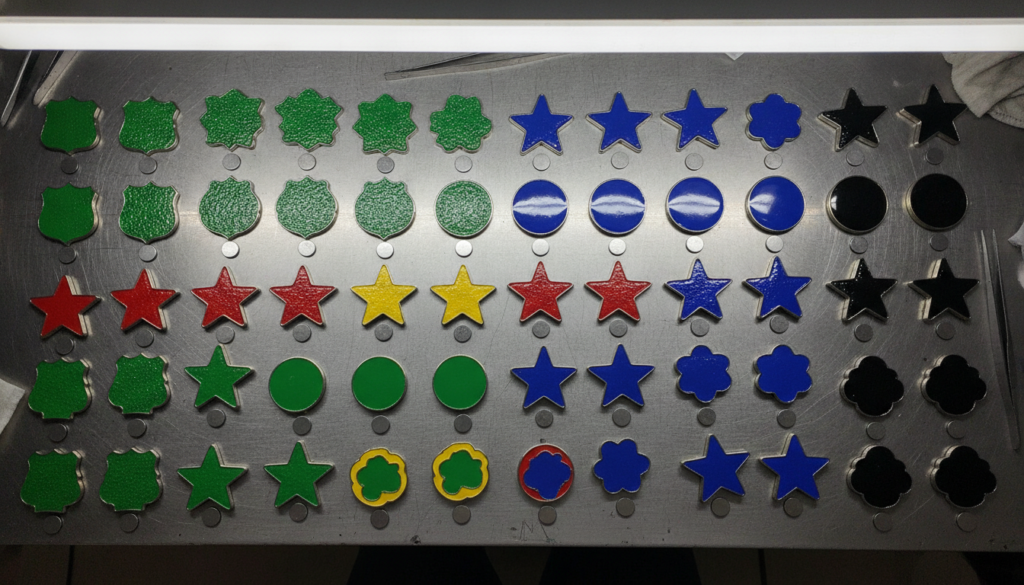
Soft enamel suits colorful, textured, cost-conscious destination souvenirs where tactile detail and vivid color separation matter; hard enamel suits premium, smooth, polished designs where a jewelry-like finish and durability justify a higher retail price. Both finishes use die-cast zinc alloy or stamped brass as the base metal, and both accept enamel paint and plating, but the manufacturing process and final surface are fundamentally different.
📋 Table of Contents
- Executive Summary
- How Soft Enamel and Hard Enamel Differ in Manufacturing and Appearance
- Which Artwork Works Best on Each Finish?
- Durability, Plating and Corrosion Resistance
- Retail Positioning and Margin Considerations
- Magnet Backing Strength and Attachment Integrity
- True Vitreous Enamel vs Imitation Hard Enamel
- Production Minimums, Sampling and Lead Time
- Key Takeaways
Executive Summary
- Finish definition: Soft enamel leaves recessed color areas with raised metal lines, creating a textured, dimensional surface; hard enamel is polished flat so color and metal sit flush, producing a smooth, jewelry-like finish.
- Artwork compatibility: Soft enamel handles detailed designs, small text, complex outlines and multiple colors more reliably; hard enamel requires clean, bold shapes with fewer colors and minimal fine detail to avoid color bleed during polishing.
- Durability trade-off: Soft enamel protects color below raised metal lines, reducing edge wear; hard enamel resists surface scratches but can chip at edges if dropped on hard surfaces.
- Cost and retail positioning: Soft enamel suits mid-range impulse-buy souvenirs with lower per-piece cost; hard enamel justifies premium pricing in museum stores and gift shops where perceived quality drives margin.
- Sourcing distinction: True vitreous hard enamel uses high-temperature glass powder and kiln firing; imitation hard enamel uses epoxy resin and polishing, which most suppliers market interchangeably, so buyers should specify the exact process and request a physical sample before committing to bulk.
How Soft Enamel and Hard Enamel Differ in Manufacturing and Appearance
Soft enamel and hard enamel start with the same base: a die-cast zinc alloy or stamped brass blank with recessed areas where color will sit and raised metal lines that define the design. The manufacturing divergence happens after the metal blank is plated.
Soft Enamel Process and Surface Texture
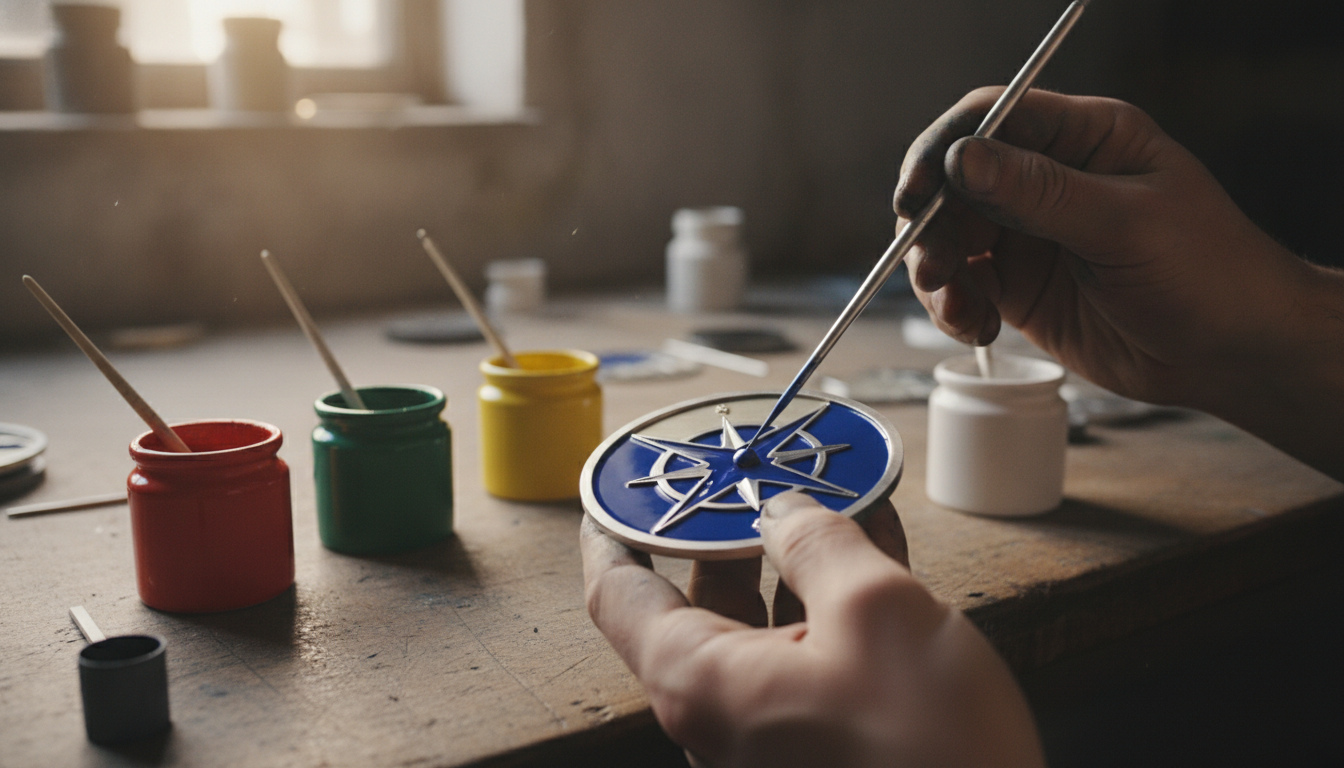
In soft enamel production, liquid enamel paint is injected into the recessed areas by hand or machine, then air-dried or low-temperature cured. The paint sits below the raised metal lines, creating a tactile, dimensional surface where you can feel the difference between color and metal. The metal lines remain proud, protecting the enamel from direct contact when the magnet is placed on a surface or handled. This textured finish gives soft enamel its characteristic souvenir-product feel, and the recessed color areas catch light differently than the polished metal, adding visual depth.
Soft enamel accepts a wide range of Pantone colors, and because the paint is applied in discrete recessed wells, color separation is clean even when adjacent areas are different hues. The process tolerates fine detail, small text and complex outlines better than hard enamel, making it the default choice for landmark silhouettes, map outlines, multilingual text and intricate tourist-attraction artwork.
Hard Enamel Process and Polished Finish
Hard enamel (also called imitation hard enamel when using epoxy resin rather than true vitreous glass powder) fills the recessed areas with enamel or resin, then the entire surface is polished flat so the color and metal lines sit flush. The result is a smooth, scratch-resistant finish with a jewelry-like appearance. True vitreous hard enamel is kiln-fired at high temperature, fusing glass powder to the metal base; imitation hard enamel uses epoxy resin cured at lower temperature and mechanically polished to the same visual effect. Most suppliers market both as hard enamel without distinguishing the process, so buyers need to specify which they require and verify it in the physical sample.
The polishing step limits artwork complexity. Fine lines, small text and tightly packed color areas risk color bleed or incomplete fill during polishing, so hard enamel works best with bold, clean shapes, fewer colors and generous spacing between elements. The smooth surface reflects light uniformly, giving the magnet a refined, premium look that suits museum stores, high-end gift shops and corporate gifts more than casual tourist souvenirs.
In practice: Soft enamel paint is injected into recessed metal wells and air-dried, leaving a textured surface where raised metal lines protect the color from edge wear, while hard enamel is polished flat after filling so color and metal sit flush, producing a smooth finish that resists scratches but requires simpler artwork to avoid color bleed during the polishing step.
Which Artwork Works Best on Each Finish?
Artwork compatibility is the primary selection criterion when choosing between soft and hard enamel for custom souvenir magnet range production. The finish must support the level of detail, color count and text size your design requires without sacrificing accuracy or legibility.
Soft Enamel: Detailed Designs, Small Text and Multiple Colors
Soft enamel handles:
- Fine line work: Landmark outlines, architectural details, map contours and intricate borders remain sharp because the paint sits in discrete recessed wells defined by raised metal lines.
- Small text: City names, attraction names and multilingual labels down to approximately 1.5mm cap height remain legible, though buyers should request a physical sample to confirm readability at the intended retail viewing distance.
- High color count: Tourist designs often use six, eight or more Pantone colors to capture flags, crests, sunsets and regional palettes; soft enamel separates each color cleanly without bleed or mixing.
- Gradients and shading: While true gradients require 3D resin or soft PVC, soft enamel can approximate shading by using multiple adjacent color areas, a technique common in flag and crest designs.
The recessed enamel and raised metal lines create natural color boundaries, so even complex, colorful artwork translates reliably to the finished magnet. Buyers sourcing destination souvenirs with detailed landmarks, multilingual text or intricate crests should default to soft enamel unless the retail price point and shelf positioning justify the premium finish.
Hard Enamel: Clean Shapes, Bold Lines and Minimal Detail
Hard enamel works best with:
- Bold, simple shapes: Geometric designs, clean logos, single-color silhouettes and minimalist landmarks where each element is large enough to withstand polishing without losing definition.
- Fewer colors: Three to five Pantone colors are typical; more colors increase the risk of color bleed during polishing and raise production cost.
- Larger text: Minimum cap height approximately 2.5mm to 3mm to ensure letters remain legible after polishing; smaller text risks losing stroke definition or filling in entirely.
- Generous spacing: Adjacent color areas should be separated by at least 0.5mm of raised metal to prevent bleed; tightly packed details that work in soft enamel often fail in hard enamel.
The polishing step that creates the smooth, flush surface also removes material, so any design element smaller than the polishing tolerance risks distortion or loss. Buyers with detailed artwork should request a pre-production proof and a physical sample to verify that all text, lines and color boundaries survive the polishing process before committing to bulk production.
Durability, Plating and Corrosion Resistance
Both soft enamel and hard enamel metal magnets can deliver years of retail life and customer use when produced with appropriate plating and backing attachment, but the durability profile differs in ways that matter for souvenir retail environments.
Soft Enamel: Edge Protection and Color Retention
Soft enamel’s recessed color areas sit below the raised metal lines, so the enamel itself is protected from direct contact when the magnet is placed on a refrigerator, handled or packed for shipping. The raised metal lines absorb minor impacts and edge wear, reducing the risk of color chipping or flaking. This design makes soft enamel durable in typical souvenir use cases where magnets are frequently moved, restacked or dropped into bags.
Plating options include gold, silver, copper, black nickel and antique finishes. The plating protects the base metal from corrosion, and buyers should specify the plating type and verify it in the physical sample, because plating quality varies widely among suppliers. Enamel paint itself resists fading under normal indoor light, though prolonged direct sunlight can dull certain colors over months or years.
Hard Enamel: Scratch Resistance and Edge Vulnerability
Hard enamel’s polished, flush surface resists scratches and surface wear better than soft enamel, making it suitable for premium gifts and museum-store items where the magnet will be handled frequently but carefully. The smooth finish does not trap dust or lint, and the color remains vivid because the enamel or resin is sealed under the polished surface.
The trade-off is edge vulnerability. Because the color and metal sit flush, there is no raised metal line to protect the enamel at the perimeter of each color area. If the magnet is dropped on a hard surface or knocked against a sharp edge, the enamel can chip, exposing the base metal underneath. This risk is higher with true vitreous enamel, which is more brittle than epoxy resin, though both finishes are more vulnerable to edge damage than soft enamel.
Buyers positioning hard enamel magnets as premium gifts should communicate careful handling expectations to customers, and consider packaging that cushions the magnet during shipping and retail display.
Corrosion and Salt-Spray Testing for Coastal Destinations
Souvenir magnets sold in coastal destinations face accelerated corrosion from salt air and humidity. Both soft and hard enamel magnets should be plated with corrosion-resistant finishes and tested for salt-spray resistance before bulk production. Buyers should request the supplier’s salt-spray test report, which typically covers a specified number of hours of exposure without visible corrosion, rust or plating discoloration. The test standard and duration should match the destination climate and expected product life.
Magnista produces enamel metal magnets to your specification with design proof, physical sample sign-off and pre-shipment checks, so buyers can verify plating quality, enamel adhesion and corrosion resistance before committing to bulk.
Retail Positioning and Margin Considerations
Finish selection directly affects retail price, perceived quality and margin. Soft enamel and hard enamel occupy different shelf positions and appeal to different buyer segments within the souvenir and gift market.
Soft Enamel: Mid-Range Impulse Buy
Soft enamel suits mid-range souvenir pricing where the magnet competes on color, detail and destination relevance rather than premium finish. The textured surface and vivid color separation signal a quality product without the jewelry-like refinement of hard enamel, positioning it as an affordable keepsake or gift-shop impulse purchase.
Retail price points typically range from the lower end to the middle of the souvenir magnet category, depending on size, color count and packaging. The lower per-piece cost allows retailers to maintain healthy margins while pricing competitively against other souvenir formats such as keychains, postcards and shot glasses. Soft enamel’s broad artwork compatibility also reduces the risk of design compromises that could hurt sales, because detailed landmarks, multilingual text and complex crests translate reliably to the finished product.
Hard Enamel: Premium Gift and Museum Store
Hard enamel justifies premium pricing in museum stores, high-end gift shops and specialty retailers where the smooth, polished finish and refined appearance align with customer expectations for quality and craftsmanship. The jewelry-like surface positions the magnet as a collectible or gift rather than a casual souvenir, and the higher retail price supports a larger margin despite the higher per-piece cost.
Buyers targeting premium segments should pair hard enamel with upgraded packaging such as individual gift boxes, printed backing cards with attraction information, or branded sleeves that reinforce the product’s quality positioning. The packaging investment is easier to justify when the magnet itself commands a higher retail price and margin.
Hard enamel also suits corporate gifts, promotional items for luxury brands and limited-edition commemorative magnets where the perceived quality and durability matter more than the per-piece cost.
Magnet Backing Strength and Attachment Integrity
The metal body of a soft or hard enamel magnet is non-magnetic, so a separate magnet backing must be attached to the reverse side. Backing strength, attachment method and pull force are critical quality factors that buyers should verify before bulk production, because weak or poorly attached magnets are a common complaint in souvenir retail.
Neodymium vs Ferrite Backing
Enamel metal magnets typically use one of two backing types:
- Neodymium (NdFeB) disc magnets: Strong, thin, expensive; provide high pull force relative to size and weight, suitable for premium hard enamel magnets and designs where a slim profile is important.
- Ferrite (ceramic) disc magnets: Weaker, thicker, lower cost; provide adequate hold for most refrigerator applications, suitable for mid-range soft enamel magnets where cost is a priority.
Buyers should specify the backing type, diameter and thickness at quotation, and request a pull-force test result from the supplier. Pull force is measured in grams or newtons and indicates how much weight the magnet can hold on a vertical steel surface before sliding. A typical souvenir magnet should hold at least its own weight plus a small margin; magnets intended to hold papers or photos should be tested with the expected load.
Attachment Methods and Failure Modes
The magnet backing is attached to the metal body using adhesive, and attachment failure is one of the most common quality complaints. The backing can detach during shipping, handling or normal use if the adhesive is under-cured, incorrectly applied or incompatible with the metal plating and magnet coating.
Buyers should request a physical sample and test the backing attachment by attempting to twist or pry the magnet off with moderate force. If the backing detaches easily, the adhesive or curing process is inadequate, and the supplier should correct it before bulk production. Pre-shipment inspection should include a random pull test on finished magnets to verify that the backing remains secure after packing and simulated transit.
Drop testing is also recommended for hard enamel magnets, because the impact can crack the enamel or dislodge the backing if the adhesive or magnet placement is weak.
True Vitreous Enamel vs Imitation Hard Enamel
Most suppliers market both true vitreous hard enamel and imitation hard enamel as simply hard enamel without distinguishing the process, but the two are materially different in composition, production method, durability and cost. Buyers should specify which they require and verify it in the physical sample, because the distinction affects product quality and retail positioning.
True Vitreous Hard Enamel (Cloisonné)
True vitreous hard enamel, also called cloisonné when applied to metal, uses finely ground glass powder mixed with metal oxides for color. The powder is applied to the recessed areas of the metal blank, then kiln-fired at high temperature (typically 750 to 850 degrees Celsius) to fuse the glass to the metal base. The firing process may be repeated multiple times to build up the enamel to the level of the raised metal lines, and the surface is then ground and polished flat.
True vitreous enamel produces a hard, scratch-resistant, chemically inert surface that resists fading, corrosion and wear for decades. It is the most durable finish available for metal magnets, and it has a distinctive glass-like luster that cannot be replicated with resin. The trade-offs are higher cost, longer production time, limited color palette (certain Pantone colors cannot be achieved with glass powder), and greater brittleness, making the edges more vulnerable to chipping if dropped.
Imitation Hard Enamel (Epoxy Resin)
Imitation hard enamel uses epoxy resin instead of glass powder. The resin is mixed with pigment to match Pantone colors, applied to the recessed areas, cured at low temperature (typically 60 to 80 degrees Celsius), and mechanically polished flat. The result is visually similar to true vitreous enamel, with a smooth, flush surface and jewelry-like finish, but the material properties differ.
Epoxy resin is less brittle than glass, so it resists edge chipping better, but it is more susceptible to surface scratches, UV fading and chemical degradation over time. It accepts a wider range of Pantone colors, costs less, and has a shorter production cycle than true vitreous enamel. For most souvenir and gift applications, imitation hard enamel delivers acceptable durability and appearance at a more accessible price point, and buyers should specify epoxy resin if cost and color flexibility are priorities.
The key is to specify the exact process at quotation and verify it in the physical sample, because suppliers often use the term hard enamel interchangeably for both processes, and buyers may receive imitation hard enamel when they expected true vitreous enamel unless the distinction is made explicit.
Production Minimums, Sampling and Lead Time
Production minimums, sampling procedures and lead time for enamel metal magnets differ by finish, artwork complexity, color count and whether the design requires a new mold or uses an existing one. Buyers should clarify these details at quotation and build them into their sourcing timeline.
Minimums and Mold Charges
Both soft enamel and hard enamel require a custom metal mold (also called a die or tool) to create the raised and recessed areas that define the design. Mold charges and production minimums are confirmed at quotation and depend on the size, shape, metal thickness and design complexity of the magnet. Buyers should request a detailed quotation that separates the one-time mold charge from the per-piece production cost, so they can evaluate the total landed cost and plan for reorders.
Reorders using the same mold typically have lower minimums and no additional tooling charge, making it more cost-effective to produce a core range of designs in volume and reorder as needed rather than producing many designs in small quantities.
Design Proof and Physical Sample Sign-Off
Buyers should request a design proof before mold production begins, so they can verify that the artwork translates correctly to the metal format, that text is legible, that color separation is clean, and that the magnet size and shape meet their retail requirements. The proof is typically a digital rendering or a flat print showing the design at actual size with Pantone color callouts.
After mold production, buyers should request a physical sample (also called a pre-production sample or golden sample) that shows the actual finish, plating, enamel color, magnet backing and packaging. The physical sample is the only reliable way to verify that soft enamel texture, hard enamel smoothness, text legibility, color accuracy and backing strength meet expectations before bulk production starts. Buyers should test the sample by placing it on a refrigerator, attempting to detach the backing, checking for sharp edges, and comparing the colors to the design proof under retail lighting conditions.
Any corrections or adjustments should be documented and confirmed in a revised sample before bulk production proceeds. Skipping the physical sample or approving it without testing is a common cause of quality disputes, because issues that are invisible in a design proof, such as weak backing adhesion, rough plating or illegible small text, only become apparent in the finished product.
Lead Time and Shipping Considerations
Lead time for enamel metal magnets includes mold production, sampling, any revisions, bulk production, quality inspection and packing. Buyers should request a timeline at quotation and build in buffer time for sampling, approval and any unforeseen delays. Rush production is sometimes available for an additional charge, but it increases the risk of quality shortcuts, so buyers should plan ahead and order early for peak seasons, holidays and special events.
Shipping options include air freight for speed and sea freight for cost. Magnets are dense and heavy relative to their size, so sea freight is typically the most cost-effective option for bulk orders, but buyers should account for the longer transit time and plan inventory accordingly. Buyers should also verify that the supplier uses appropriate packing materials, such as individual poly bags, foam inserts or blister cards, to protect the magnets from scratching, chipping and backing detachment during transit.
Key Takeaways
- Soft enamel has recessed color areas and raised metal lines, creating a textured, dimensional finish that protects the enamel from edge wear and handles detailed artwork, small text and multiple colors reliably.
- Hard enamel is polished flat so color and metal sit flush, producing a smooth, jewelry-like finish that resists surface scratches but requires simpler artwork with bold shapes, fewer colors and larger text to avoid color bleed during polishing.
- True vitreous hard enamel uses kiln-fired glass powder and delivers decades of durability with a glass-like luster, while imitation hard enamel uses epoxy resin and mechanical polishing to achieve a similar appearance at lower cost with less brittleness.
- Soft enamel suits mid-range impulse-buy souvenirs where color, detail and destination relevance drive sales, while hard enamel justifies premium pricing in museum stores and gift shops where perceived quality and refined appearance support higher margins.
- Magnet backing strength, attachment method and pull force are critical quality factors that buyers should verify in the physical sample, because weak or poorly attached backings are a common complaint in souvenir retail and can lead to returns or negative reviews.
- Buyers should specify the exact enamel process (soft, true vitreous hard, or imitation hard with epoxy resin), request a design proof and a physical sample, and test the sample for finish quality, text legibility, color accuracy, backing strength and edge durability before approving bulk production.
Can you mix soft enamel and hard enamel on the same magnet design?
No, the two finishes require different production processes that cannot be combined on a single magnet. Soft enamel is air-dried or low-temperature cured with the paint sitting below raised metal lines, while hard enamel is polished flat after filling, requiring the entire surface to be processed uniformly. Buyers who want both finishes should produce two separate versions of the design, one in soft enamel and one in hard enamel, and position them at different retail price points or for different customer segments.
How do you verify that a supplier is delivering true vitreous enamel rather than epoxy resin?
Request a physical sample and test it with a hot needle or soldering iron on an inconspicuous area. True vitreous enamel is glass and will not melt, burn or emit fumes when heated; epoxy resin will soften, discolor or emit a chemical smell. Buyers should also request documentation of the kiln-firing process, including temperature logs and process photos, and verify that the supplier has kiln equipment capable of reaching the temperatures required for true vitreous enamel. If the supplier cannot provide this documentation or the sample fails the heat test, the finish is imitation hard enamel using epoxy resin, and the buyer should renegotiate the price or specification accordingly.
What plating finishes work best for coastal souvenir destinations?
Black nickel, antique brass and antique copper plating offer better corrosion resistance in salt-air environments than bright gold or silver plating, because the darker, matte finishes hide minor tarnish and corrosion better than polished finishes. Buyers should request a salt-spray test report from the supplier showing the number of hours the plated magnet can withstand salt-spray exposure without visible rust, discoloration or plating failure, and verify that the test duration matches the expected product life and destination climate. Protective clear coatings can also be applied over the plating to extend corrosion resistance, but they add cost and may affect the finish appearance, so buyers should evaluate them in the physical sample.
Ready to produce custom enamel metal magnets for your destination or retail range?
Request a Quote and Sample →
Written by the Magnista export team, who coordinate design proofs, sampling and production for custom souvenir magnets.