Resin, soft PVC, metal or wood: choosing a process before you choose a price
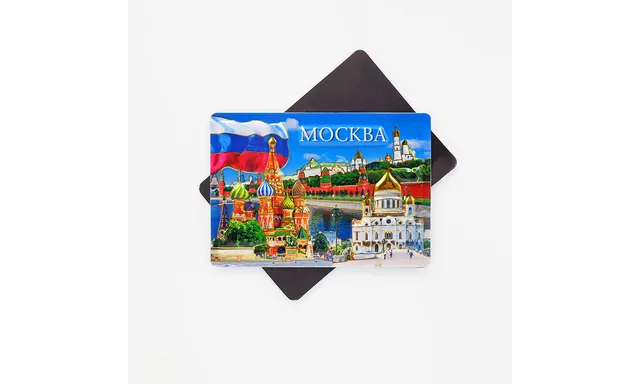
Most souvenir magnet enquiries open with a price per piece. That is the last number that can be answered honestly, because it sits downstream of the process, and the process sits downstream of two things a supplier cannot guess: what the artwork actually is, and what the rack it hangs on looks like.
There are four processes worth considering for a destination magnet. They are not tiers of quality. Each one makes a different trade, and each one destroys a different kind of artwork.
What the four processes actually do
3D resin
A cured resin dome is poured over a printed and shaped base, so the artwork sits under a lens rather than on a flat face. The depth comes from the sculpted base underneath. That is what lets a cathedral or a coastline read as a shape rather than as a picture of one.
It is the most forgiving process for photographic and painterly artwork, because the image is printed rather than moulded. It is the weakest on edge definition: the dome softens everything at the perimeter.
Soft PVC
Colour is built up in moulded layers rather than printed. Each colour is a physical piece of material with a raised border between it and the next. The result survives handling and sunlight far better than a printed surface.
The consequence buyers miss: because colour is moulded, a gradient is not available. A sunset that fades across the sky in your artwork comes back as three or four stepped bands. Artwork has to be redrawn for the process, not just supplied to it.
Metal
The piece is cast or stamped in metal, recessed areas are filled with enamel, and the raised metal is plated. The plated line stays visible as the outline of the design, and the weight in the hand is where the perceived value comes from.
It has the highest floor on detail: very fine text and hairline linework fill in or collapse, because there is a minimum wall thickness the metal can hold between two enamel wells.
Wood
The shape is laser-cut from sheet stock, engraved where the design needs burnt-in line work, and UV printed where it needs colour. Grain shows through, so no two pieces are identical.
That variation is the point for some programmes and a defect for others. If a buyer expects every piece in a carton to match, wood is the wrong answer regardless of how well it suits the story.
Three questions that usually decide it
1. Is the destination recognisable by silhouette?
If the thing people photograph has an outline — a tower, an arch, a ship, a peak — resin and metal both let the outline do the work, and the piece is identifiable from two metres away on a crowded rack. If the destination is a landscape or a mood rather than a structure, a shaped outline buys nothing, and wood or a printed face is the cheaper way to the same result.
2. Where does the piece physically live before it is sold?
A rack inside a museum shop and a rack outside a coastal kiosk are different products. Sun and salt air take a printed surface apart in a season. Soft PVC and plated metal hold up; a printed wood face and an unprotected print do not. This question decides more returns than any other, and it is almost never in the brief.
3. What is the piece competing against on the rack?
If everything next to it is a flat printed magnet, depth is the differentiator and resin wins. If the rack is already full of resin, the keepsake read of metal is what makes a visitor pick yours up. The right answer changes by destination, and a supplier who has not seen the rack cannot give it to you.
Artwork that does not survive the translation
Four things routinely have to be redrawn once the process is chosen:
- Gradients into soft PVC. They become bands. Decide where the bands go, or the mould decides for you.
- Thin type into metal. Below the minimum wall the enamel wells merge and the letters close up.
- Photographic detail into wood. Engraving is tonal, not photographic; UV print on grain loses the shadows first.
- Full-bleed edges into resin. The dome curves away at the perimeter, so anything critical at the edge is read at an angle.
None of these are reasons to change the process. They are reasons to see the artwork before quoting, which is why a price given before the artwork arrives is a guess wearing a number.
What to send to get a real recommendation
A useful feasibility answer needs four things, and none of them is a specification:
- The artwork, or a reference piece you already sell
- The destinations the range has to cover
- Where the rack physically sits — indoors, outdoors, coastal, seasonal
- The retail price the piece has to land under
That last one is the constraint that quietly rules processes in and out, and it is the one buyers leave until the end.
Send those four and you get back a process recommendation with the reasoning attached, not just a price. The materials page sets out the four processes side by side if you want to narrow it down first.