What Makes a Souvenir Fridge Magnet Sell in a Gift Shop?
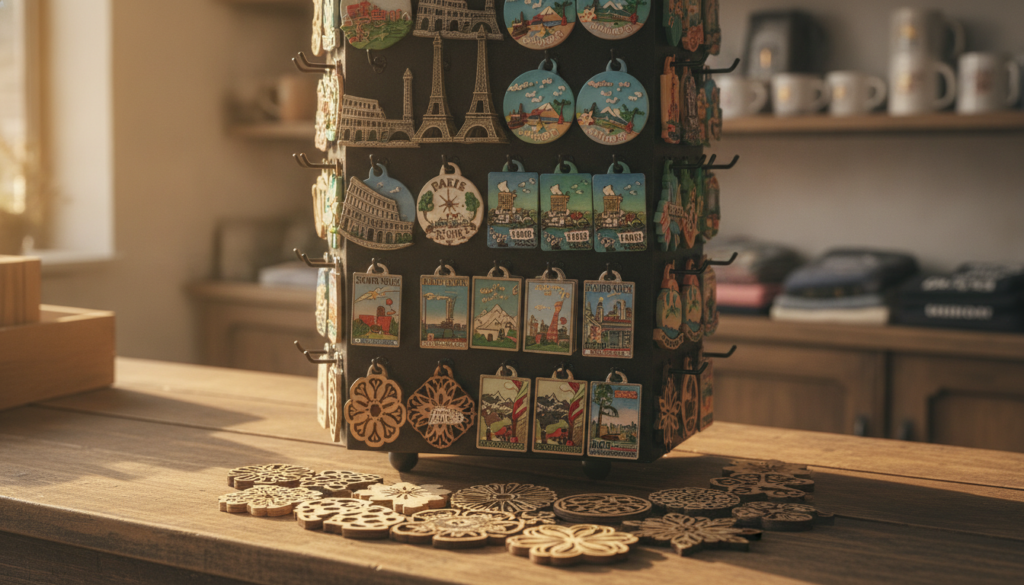
Souvenir fridge magnets sell when the design is visually tied to the destination, the perceived quality matches the price, and the magnet strength feels substantial. Travelers skip generic mass-produced designs that lack local character, and gift shops see higher sell-through when magnets feature recognizable landmarks, local symbols, or destination-specific artwork that cannot be bought anywhere else.
📋 Table of Contents
Executive Summary
- Design specificity: Magnets with recognizable local landmarks or symbols outperform generic tourist designs because buyers want a memento that proves they visited a specific place.
- Quality perception: Print clarity, material finish, and surface protection determine whether travelers feel the price is fair or inflated.
- Magnet strength: Weak magnets that slide down a refrigerator door hurt repeat business and word-of-mouth recommendations.
- Material choice: 3D resin creates high-relief detail for landmarks, soft PVC suits clean graphic designs, metal adds premium weight, and wood appeals to eco-conscious buyers.
- Merchandising tactics: Checkout placement, vertical display density, and clear pricing drive impulse purchases in gift shops.
Does the design feel local and destination-specific?
Travelers buy souvenir fridge magnets to remember a specific experience. Generic designs that could represent any beach, mountain, or city get passed over because they lack proof of place.
Recognizable landmarks drive purchase decisions
Gift shops report higher conversion when magnets feature architecture, monuments, or natural features that visitors photographed during their trip. A magnet showing the exact silhouette of a bridge, tower, or coastline triggers an emotional connection that abstract designs cannot match. Buyers want to point at the magnet on their refrigerator and tell a story about where they stood when they saw that view.
Local symbols and cultural motifs add authenticity
Beyond landmarks, designs that incorporate regional patterns, traditional crafts, or local wildlife signal authenticity. Museum stores see strong sell-through for magnets that reflect the collection inside, whether that means historical artifacts, native flora, or architectural details from the building itself. The design must feel curated for that location, not pulled from a generic souvenir catalog.
Avoid mass-produced templates
Travelers often say souvenir magnets are too generic or mass-produced, so they skip them unless the design feels distinctive. A magnet with a stock photo and a city name in a standard font reads as low-effort merchandising. Custom artwork, hand-drawn illustrations, or photography commissioned specifically for the location create perceived value that justifies the retail price.
Does the quality justify the retail price?
The main disappointment is paying gift-shop prices for items that feel like ordinary products with a souvenir markup. Quality perception starts the moment a buyer picks up the magnet and examines the surface, edges, and weight.
Print clarity and color separation
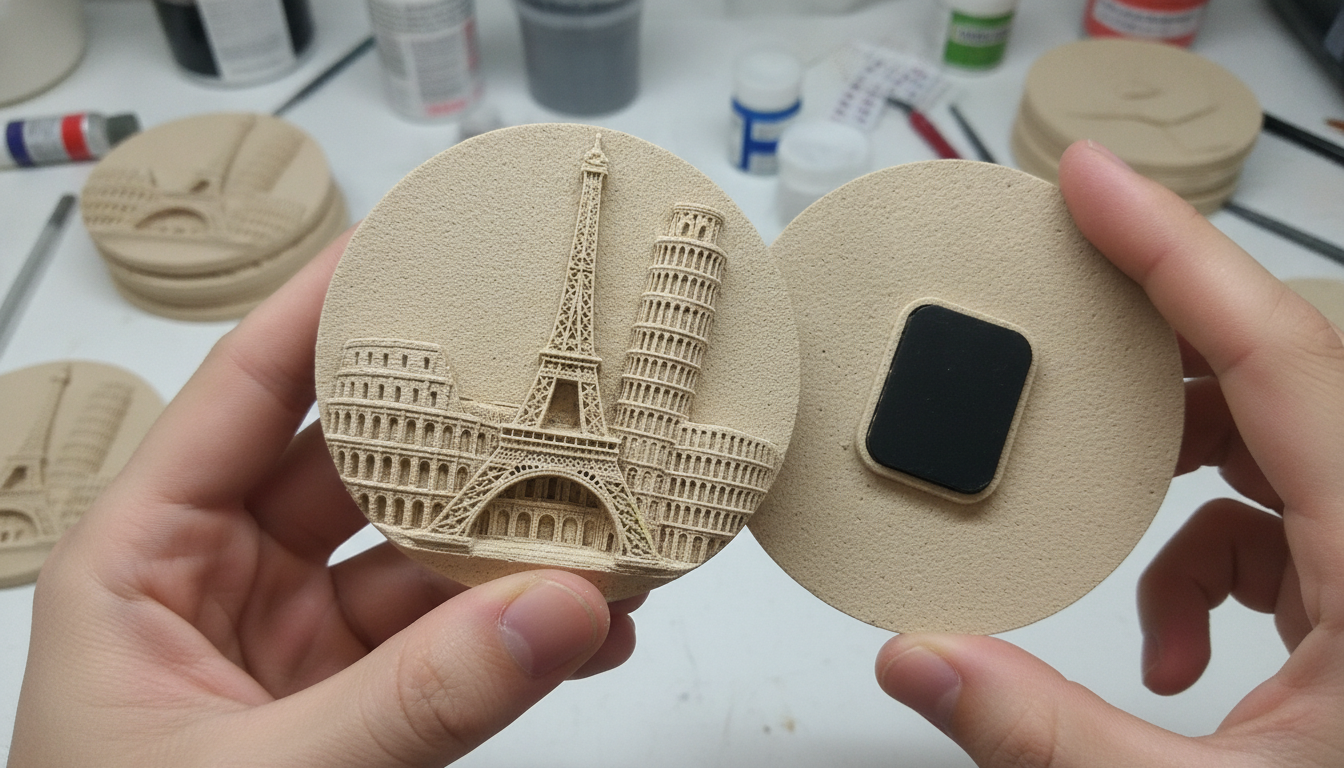
Blurry text, misaligned layers, or muddy color transitions signal cheap production. Buyers compare what they see on the shelf to the mental image of the landmark or symbol, and any distortion breaks the connection. 3D resin magnets are cast in layers, so a physical sample is the only way to confirm that thin text and small color areas survive the pour before bulk production starts.
In practice: 3D resin magnets are cast in layers, so a physical sample reveals whether fine text and narrow color boundaries remain sharp after the pour, which matters when the design includes building details or intricate local patterns.
Surface finish and protection
Glossy resin coatings, smooth PVC surfaces, and protective enamel on metal all contribute to a premium feel. Matte finishes can work for wood or certain artistic styles, but any rough edges, visible mold lines, or uneven coating thickness make the magnet feel unfinished. Gift shop buyers should request samples of the exact finish specified in the production order, because finish quality varies between suppliers even when the base material is identical.
Durability and damage resistance
Some buyer feedback for custom magnets focuses on fragile or defective arrivals, showing that damage in transit and weak quality control can hurt satisfaction. Magnets that chip, crack, or lose paint after minimal handling create returns and negative reviews. Pre-shipment inspection catches defects before the order leaves the production partner, which protects the retailer’s reputation and reduces the cost of replacements.
How strong should the magnet be?
Magnet strength is the single most common functional complaint. A magnet that slides down the refrigerator door or falls off when the door closes feels like a failed product, regardless of how attractive the design is.
Neodymium vs ceramic magnets
Neodymium magnets deliver stronger pull in a thinner profile, which matters for lightweight resin or PVC designs. Ceramic magnets are less expensive but require more surface area to achieve the same holding force. For magnets larger than a business card, ceramic backing works well. For small or thin designs, neodymium prevents the magnet from feeling weak.
Magnet size relative to product weight
A heavy 3D resin magnet with a small magnet disk will slide. The magnet backing must be proportional to the total weight of the finished product. Buyers should specify the magnet grade and size at the quotation stage, and verify it on the physical sample. If the sample slides on a vertical refrigerator door, the magnet backing needs to be upgraded before bulk production.
Testing magnet pull before shipment
Pre-shipment checks include a simple vertical-hold test: the magnet is placed on a steel surface at a 90-degree angle, and any unit that slides or falls is rejected. This step catches weak magnets, incorrectly sized backing, or adhesive failures that would otherwise reach the retail shelf and disappoint customers.
Which material sells best: 3D resin, soft PVC, metal, or wood?
Material choice depends on the design style, target price point, and the story the gift shop wants to tell. Each material appeals to a different segment of travelers.
3D resin for high-relief landmarks
Resin magnets are cast in multiple layers, which creates depth and shadow that flat printing cannot match. Buildings, monuments, and natural features gain dimension that makes the design feel closer to a miniature sculpture than a printed image. This material works best when the design has distinct foreground and background elements that benefit from physical relief.
Soft PVC for bold graphics and durability
Injection-molded soft PVC delivers clean color blocks and smooth edges, which suits logos, mascots, and graphic illustrations. The material is flexible, so it resists chipping and cracking during shipping and handling. PVC magnets appeal to budget-conscious buyers who want bright, durable souvenirs without the premium price of resin or metal.
Metal for premium positioning and collector appeal
Die-cast zinc alloy or stamped brass with enamel paint and plating adds weight and a metallic finish that signals quality. Museum stores and high-end gift shops use metal magnets to differentiate their merchandise from mass-market tourist shops. The material also supports intricate cutouts and fine detail that resin cannot achieve at small sizes.
Wood for sustainability and natural aesthetics
Laser-cut wood with UV printing appeals to travelers who prefer natural materials and want to avoid plastic. The grain and texture of the wood become part of the design, which works well for rustic destinations, national parks, and eco-tourism attractions. Wood magnets also allow for engraved text and patterns that create a handcrafted feel.
Where should magnets be placed in the store?
Placement drives impulse purchases. Magnets are small, affordable, and easy to add to a basket at the last moment, but only if they are visible and accessible at decision points throughout the store.
Checkout counter and queue lines
The checkout counter is the highest-conversion location for low-cost impulse items. Vertical displays that show multiple designs at eye level encourage last-minute additions. Clear pricing and a compact footprint prevent the display from cluttering the counter while maximizing the number of designs visible to each customer.
Entry and exit zones
Placing magnets near the entrance primes visitors to consider a purchase, and positioning them near the exit captures buyers who decided they want a souvenir but have not yet committed to a larger item. Exit placement works especially well when paired with a sign that frames magnets as an easy, packable gift for friends and family back home.
Vertical density and design variety
Horizontal rows of identical magnets create visual monotony. Vertical displays that group designs by theme (landmarks, wildlife, cultural symbols) or material (resin, metal, wood) help buyers navigate the selection quickly. Displaying a mix of sizes and price points in the same fixture increases the chance that every visitor finds a design that matches their budget and taste.
Key Takeaways
- Designs tied to specific landmarks, local symbols, or destination-specific artwork outperform generic tourist templates because travelers want proof of place.
- Print clarity, surface finish, and material quality determine whether buyers perceive the price as fair or inflated, and poor quality creates returns and negative word-of-mouth.
- Magnet strength must be proportional to product weight, and weak magnets that slide down refrigerator doors are the most common functional complaint.
- 3D resin suits high-relief landmarks, soft PVC works for bold graphics and durability, metal adds premium weight and collector appeal, and wood attracts eco-conscious buyers.
- Checkout placement, vertical display density, and clear pricing drive impulse purchases in gift shops, and exit-zone positioning captures buyers who decided they want a souvenir but have not yet committed to a larger item.
- Pre-shipment inspection catches defects, weak magnets, and finish inconsistencies before the order reaches the retail shelf, which protects the retailer’s reputation and reduces replacement costs.
What size fridge magnet sells best in a gift shop?
Magnets between 50mm and 80mm in diameter or width strike a balance between visibility and affordability. Smaller magnets feel insubstantial and get lost on crowded refrigerators, while oversized magnets increase the retail price beyond the impulse-purchase threshold. The ideal size depends on the design: intricate landmarks benefit from larger formats that preserve detail, while simple logos and symbols work well in compact sizes that travelers can pack easily.
Are souvenir fridge magnets profitable for gift shops?
Magnets deliver strong margins when sourced at wholesale pricing and merchandised for impulse purchases. The combination of low per-unit cost, small shelf footprint, and high turnover makes magnets one of the most profitable categories in tourist retail. Profitability depends on design relevance, quality perception, and placement: magnets that feel generic or low-quality sit on shelves, while locally specific designs at checkout counters sell consistently throughout the season.
How do you price souvenir magnets for retail?
Retail pricing reflects material quality, design complexity, and local market expectations. Gift shops typically apply a markup that covers rent, labor, and seasonal fluctuations in foot traffic. Buyers should compare the wholesale cost against the perceived value of the design and material: a 3D resin magnet with detailed relief supports a higher retail price than a flat PVC design, and metal magnets with enamel and plating justify premium positioning. Pricing must feel fair relative to other souvenirs in the store and competitive with nearby shops selling similar items.
Ready to source souvenir fridge magnets that sell?
Request a quote by material →
Written by the Magnista export team, who coordinate design proofs, sampling and production for custom souvenir magnets.