Fridge Magnet Strength: Pull Force Standards & Testing Guide
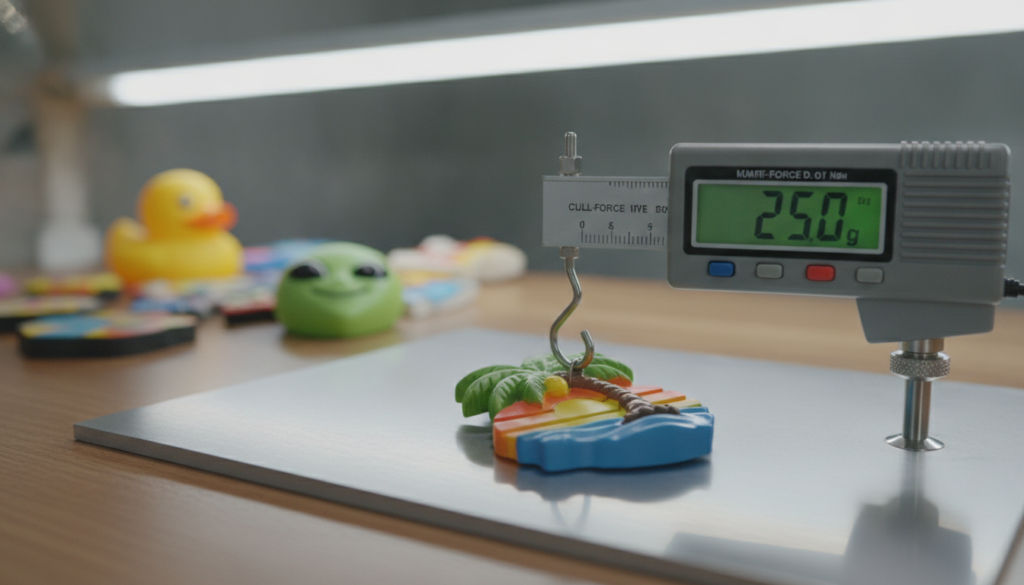
Fridge magnet strength is measured by pull force: the weight in grams or ounces the magnet can hold perpendicular to a flat steel surface before sliding or detaching. Souvenir magnets typically need 80-150 grams of pull force to hold their own weight on a vertical fridge door; decorative-only magnets may use 40-60 grams. Custom souvenir magnets are produced in 3D resin, soft PVC, metal and wood, each with different magnetic core options, and pull strength is checked during pre-shipment inspection using a calibrated pull-force meter or simple weight test.
📋 Table of Contents
Executive Summary
- Pull force is the core metric: measured in grams or ounces, it tells you the perpendicular weight a magnet can hold on flat steel before it slides or falls.
- Souvenir magnets need 80-150 grams typically: enough to hold their own weight plus light paper on a vertical fridge door; purely decorative magnets may use less.
- Vertical holding strength is lower than rated pull force: shear and gravity reduce real-world performance, so buyers should test samples on an actual fridge surface.
- Material and core type drive strength: 3D resin and soft PVC magnets use flexible rubber or ferrite backing; metal magnets often embed neodymium or ferrite discs; wood magnets rely on adhesive-backed magnetic sheet.
- Pre-shipment testing catches weak batches: calibrated pull-force meters or simple weight tests confirm that every magnet meets the agreed specification before shipping.
What Pull Force Means for Souvenir Magnets
Pull force is the weight a magnet can support when pulled straight away from a flat steel surface. It is the industry standard for rating fridge magnet strength. Buyers frustrated by weak magnets often discover that the supplier never stated a pull-force specification, leaving retail customers with magnets that slip or fall.
Pull Force vs. Shear Force on a Vertical Surface
Rated pull force applies to perpendicular separation. On a vertical fridge door, gravity creates shear force: the magnet must resist sliding downward, not just being pulled outward. Shear retention is typically 30-50% of the rated pull force, so a magnet rated at 100 grams may only hold 30-50 grams of paper before it starts to creep down the door. Buyers ordering souvenir magnets for tourist shops should ask the supplier for both the pull-force rating and a simple vertical-hold test result.
The Magnet’s Own Weight Matters
A 3D resin magnet with thick relief detail may weigh 25-40 grams. If its pull force is only 60 grams, the magnet uses most of its strength just holding itself and has little left for paper or photos. Museum store buyers report that heavier souvenir magnets need proportionally higher pull force to stay in place, especially on glossy or powder-coated fridge surfaces that reduce friction.
Buyer pain point: Users report that weak magnets slip or fall when they try to hold photos or heavier items on a vertical fridge surface, leading to returns and negative reviews.
How Material and Magnet Core Affect Strength
Custom souvenir magnets are produced in four main processes, each with different magnetic backing options. The material and core type together determine fridge magnet strength and cost.
3D Resin and Soft PVC: Flexible Rubber or Ferrite Backing
- Flexible rubber magnetic sheet: adhesive-backed, easy to die-cut to any shape, pull force typically 40-80 grams per square inch depending on sheet thickness and grade. Suitable for lightweight decorative souvenirs.
- Ferrite disc or strip: embedded in the resin or PVC during molding, provides 80-150 grams of pull force. Ferrite is heavier than rubber sheet but more resistant to demagnetization over time.
- Neodymium disc (rare for souvenirs): very strong pull force (200+ grams) but adds cost and raises safety concerns if the magnet is sold as a toy or near children, because small neodymium magnets are regulated under CPSIA and EN71 small-parts rules.
Buyers ordering 3D resin or soft PVC magnets should specify the target pull force at quotation. The supplier will recommend rubber sheet or ferrite based on the magnet’s size, weight and intended use.
Metal Magnets: Embedded Ferrite or Neodymium
Die-cast zinc alloy and stamped brass magnets typically embed a small ferrite or neodymium disc in the back during casting or assembly. Metal magnets are heavier than resin or PVC, so they need higher pull force to stay vertical. A 35-gram metal magnet should have at least 120-150 grams of pull force to hold itself plus light paper. Buyers should request a sample with the proposed core and test it on their own fridge before approving bulk production.
Wooden Magnets: Adhesive-Backed Magnetic Sheet
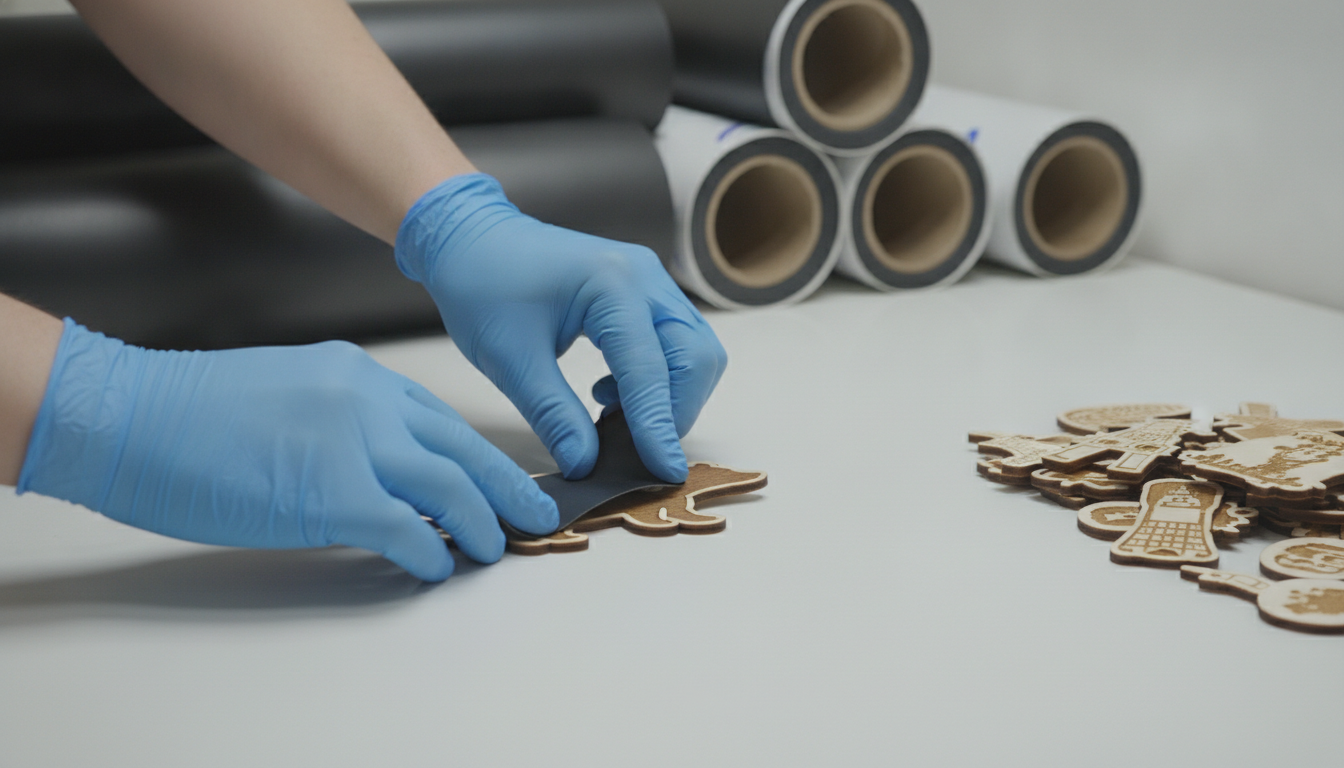
Laser-cut wood magnets use adhesive-backed flexible rubber magnetic sheet applied to the back after cutting and printing. The sheet is die-cut to match the wood shape. Pull force depends on sheet thickness and the contact area: larger magnets can use thicker sheet for higher strength, but very small or intricate shapes may only achieve 40-60 grams. Buyers ordering wooden souvenir magnets should confirm the sheet grade and thickness in the quotation and ask for a pull-force test result on the pre-production sample.
In practice: Flexible rubber magnetic sheet is graded by gauss rating and thickness; a thicker or higher-gauss sheet increases pull force but also adds material cost and weight, so the supplier will recommend the grade that balances strength, cost and the magnet’s final retail use.
How Pull Strength Is Tested Before Shipment
Pre-shipment inspection includes a pull-force check to verify that every batch meets the agreed specification. Three common methods are used, from calibrated instruments to simple go/no-go tests.
Calibrated Pull-Force Meter (Digital or Spring Scale)
A pull-force meter (also called a gauss meter or tension gauge) measures the exact force needed to separate the magnet from a flat steel plate. The magnet is placed on the plate, a hook attached to the meter is fixed to the magnet’s face, and the meter is pulled straight up until the magnet releases. The peak reading in grams, ounces or Newtons is recorded. This method gives precise, repeatable results and is used when the buyer specifies a minimum pull-force threshold.
Buyers should ask the supplier to include pull-force test results in the pre-shipment inspection report, along with photos of the test setup and the meter display. If the agreed specification is 100 grams minimum, the report should show that a random sample of magnets all exceeded that figure.
Simple Weight Test (Go/No-Go)
For buyers who need a quick pass/fail check without investing in a meter, a simple weight test works well. The magnet is placed on a vertical steel plate or fridge door, and calibrated weights (small washers, coins or gram weights) are stacked on a paper card held by the magnet. The test passes if the magnet holds the target weight without sliding for a set time (commonly 30 seconds). This method is less precise than a meter but catches weak magnets quickly during sampling or receiving inspection.
Vertical Hold Test (Real-World Simulation)
Because rated pull force does not predict vertical holding strength perfectly, some buyers add a vertical-hold test: the magnet is placed on a fridge door, a shopping list or photo is clipped under it, and the setup is left for 24 hours. If the magnet has not slipped, it passes. This test is subjective but mirrors actual retail use. Buyers ordering magnets for museum stores or tourist attractions should run this test on the physical sample before approving bulk production, using the same fridge surface their customers are likely to have.
Testing tip: Buyers want clearly stated pull strength or recommended use, and get frustrated when product listings do not specify it. Including the pull-force rating and test method in your product data sheet reduces returns.
Why Some Magnets Fail on Stainless Steel Fridges
Magnets may not stick well to stainless-steel refrigerators because the metal often contains nickel, which reduces magnetic attraction. True stainless steel (304 or 316 grade) is non-magnetic or very weakly magnetic. Many modern fridges use a thin stainless-steel cosmetic skin over a steel or plastic body, so the magnet must bridge a small air gap, which cuts effective pull force by half or more.
Test on the Actual Fridge Surface
Buyers should test the physical sample on the fridge surface their customers are likely to use. If the target market includes high-end appliance owners, test on a stainless-steel fridge panel. If the magnet does not hold reliably, the supplier can increase pull force by using a thicker ferrite disc, a neodymium core or a larger contact area. Some buyers order two versions: a standard magnet for painted-steel fridges and a stronger version for stainless or powder-coated surfaces.
Protective Backing to Prevent Scratches
Strong magnets can scratch glossy fridge finishes if the back is rough or if grit gets trapped between the magnet and the surface. Buyers ordering metal or resin magnets with high pull force should ask the supplier to apply a thin felt or foam pad to the magnetic backing. The pad reduces friction slightly but protects the fridge and gives the magnet a premium feel. The pad material and adhesive must be specified at quotation, because adding it after production is difficult.
How to Specify Strength When Ordering Custom Magnets
Buyers should state the target pull force and intended use in the initial quotation request. This allows the supplier to recommend the right magnetic core and test method before the mold is made.
State the Intended Use
- Decorative display only: 40-80 grams is sufficient; the magnet just needs to stay in place with no load.
- Hold light paper or shopping lists: 80-120 grams; enough to resist sliding under light shear force.
- Hold photos or multiple sheets: 120-200 grams; the magnet must support its own weight plus external load.
Buyers should also specify the fridge surface type if known. If the target market includes stainless-steel fridges, state that in the quotation request so the supplier can propose a stronger core.
Request Pull-Force Test on the Physical Sample
Every order goes through a design proof and a physical sample sign-off before bulk production. Buyers should ask the supplier to include a pull-force test result with the sample: the measured pull force in grams, the test method used, and a photo of the test setup. If the sample does not meet the target, the supplier can adjust the magnetic core or backing thickness before cutting the bulk molds.
Specify Acceptable Tolerance and Sampling Plan
Pull force varies slightly between magnets in the same batch due to core placement, adhesive thickness and material density. Buyers should agree on an acceptable range (for example, 100 ± 20 grams) and a sampling plan for pre-shipment inspection. A common approach is to test five magnets from each production lot; if all five meet the minimum, the lot passes. If any magnet falls below the threshold, the supplier tests a larger sample or adjusts the process.
Buyers ordering large quantities should also request a certificate of conformity or test report that lists the batch number, test date, sample size and pass/fail result. This document supports quality claims if a retail customer reports weak magnets after delivery.
Key Takeaways
- Pull force is measured in grams or ounces and represents the perpendicular weight a magnet can hold on flat steel before detaching; souvenir magnets typically need 80-150 grams to hold their own weight on a vertical fridge door.
- Vertical holding strength is lower than rated pull force because gravity creates shear force; real-world holding capacity is often 30-50% of the pull-force rating.
- Material and magnetic core together determine strength: 3D resin and soft PVC magnets use flexible rubber sheet or ferrite backing; metal magnets embed ferrite or neodymium discs; wooden magnets rely on adhesive-backed magnetic sheet.
- Stainless-steel fridges reduce magnetic attraction because the alloy contains nickel or uses a thin cosmetic skin over non-magnetic material; buyers should test samples on the actual fridge surface their customers will use.
- Pre-shipment testing uses calibrated pull-force meters, simple weight tests or vertical-hold simulations to verify that every batch meets the agreed specification before shipping.
- Buyers should state target pull force, intended use and fridge surface type in the quotation request, and request a pull-force test result on the physical sample before approving bulk production.
How many grams of pull force does a souvenir fridge magnet need?
Decorative souvenir magnets need 40-80 grams if they only display themselves. Magnets intended to hold light paper or shopping lists should have 80-120 grams. Magnets that will hold photos or multiple sheets need 120-200 grams. The magnet’s own weight must be subtracted from the pull force to find the net holding capacity, so heavier 3D resin or metal magnets need proportionally higher pull force than flat PVC magnets.
Why do some fridge magnets not stick to stainless steel appliances?
True stainless steel (304 or 316 grade) contains nickel and is non-magnetic or very weakly magnetic. Many modern fridges use a thin stainless-steel cosmetic skin over a steel or plastic body, creating an air gap that cuts effective pull force by half or more. Buyers selling to markets with high-end appliances should test samples on actual stainless-steel panels and ask the supplier to increase pull force by using a thicker ferrite disc, a neodymium core or a larger contact area if the magnet does not hold reliably.
What is the difference between pull force and holding force on a vertical fridge door?
Pull force is the weight a magnet can support when pulled straight away from a flat steel surface, measured perpendicular to the surface. Holding force on a vertical fridge door is the weight the magnet can support against gravity without sliding, which creates shear force. Shear retention is typically 30-50% of the rated pull force, so a magnet rated at 100 grams may only hold 30-50 grams of paper vertically. Buyers should test samples on a vertical surface to confirm real-world holding strength before approving bulk production.
Need custom souvenir magnets with verified pull strength?
Request a Quote with Test Specs →
Written by the Magnista export team, who coordinate design proofs, sampling and production for custom souvenir magnets.